2026/05/13
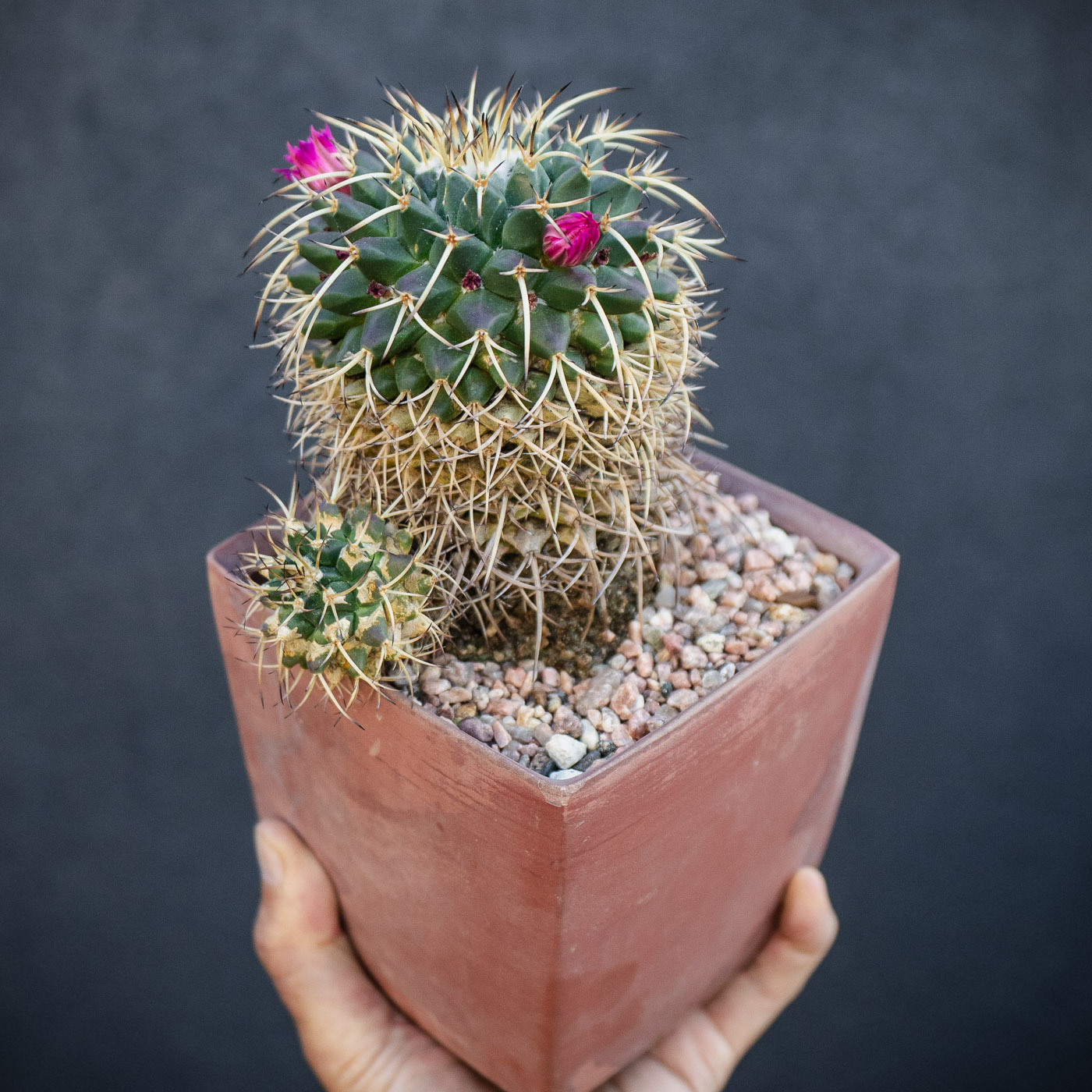
Mammillaria compressa
Acquired4 months ago5/7/2026
Notes
In a pot by JimRox Backyard Growers
This species is notable for being one of the earlier bloomers in the cactus family. It begins its growth cycle and flowering phase in late winter and early spring (often January through March), producing rings of small, bell-shaped flowers that range from deep pink to purple. It is highly opportunistic and grows vigorously during the spring and summer if water is available. Because it forms dense colonies, it has a significant capacity to store water in its tuberculate body. It enters a rest period during the cold, dry winter months. During this time, the plant may slightly shrink or "compress" into the soil.
Like many high-desert Mexican species, it is prone to rot if the substrate remains damp for too long, especially in the center of a large clump. It requires a very free-draining, mineral-heavy substrate—such as the 80% pumice mix—to ensure the roots can breathe. It also benefits from high light to keep the spination dense and prevent the individual heads from elongating.
Origin
Central Mexico. It is widely distributed across the states of Hidalgo, Querétaro, San Luis Potosí, and Guanajuato. It is a classic inhabitant of the "matorral" (thorny shrubland) and limestone hillsides, where it often forms massive, sprawling mounds or cushions of many individual heads. In the wild, these clumps can reach over 1 meter in diameter, anchoring themselves into rocky crevices and shallow, mineral-rich soils.
Note: Coordinates indicate a general region for educational purposes and are not exact locations. Please do not use them for collection or poaching.