2026/05/25
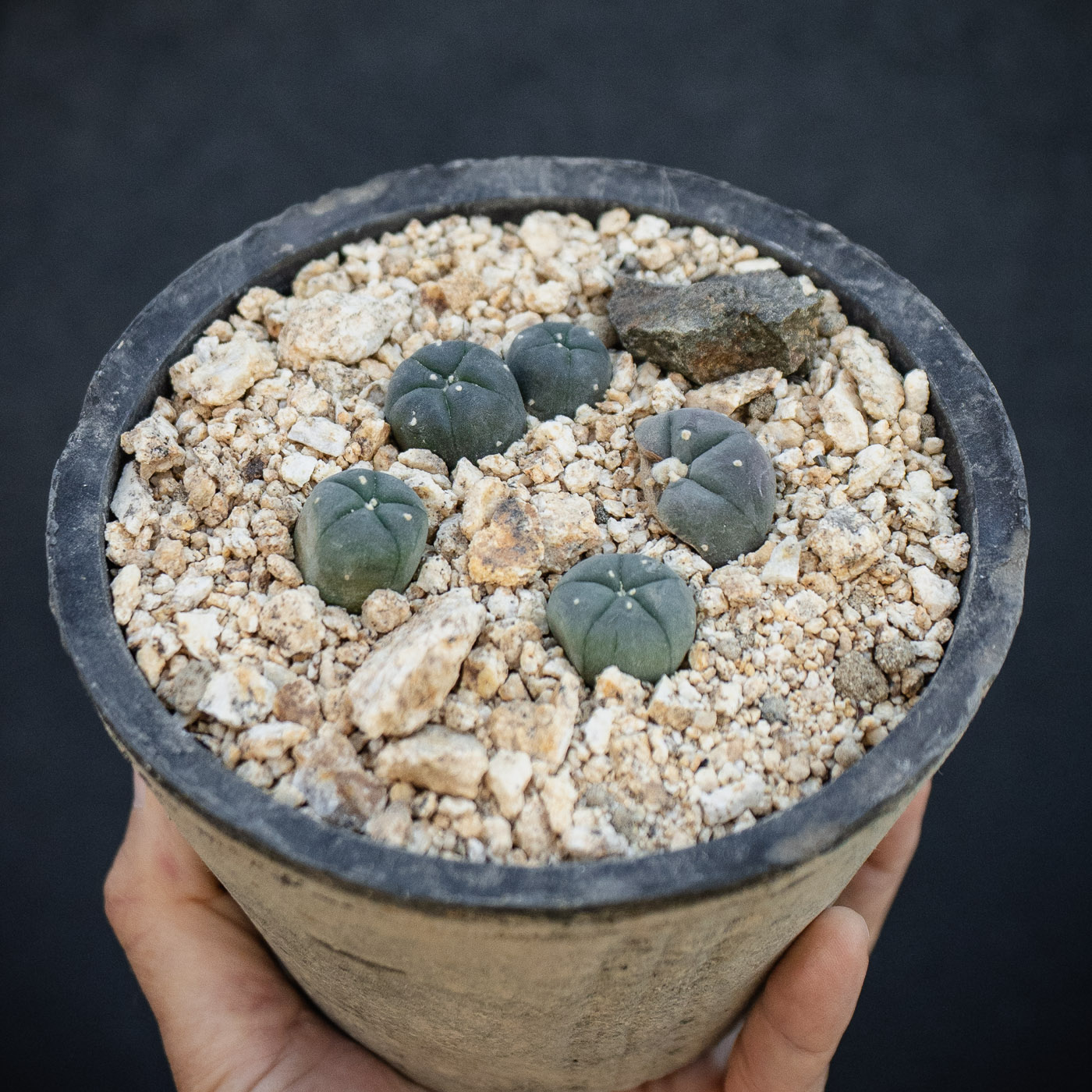
Lophophora williamsii
Acquired4 months ago5/24/2026
Notes
This species is a dedicated summer grower, syncing its main vegetative push and metabolic activity with the arrival of high temperatures and seasonal monsoonal storms. Throughout the warm months, it pushes small, delicate white-to-light-pink flowers from the heavily woolly center of the apex. In the late autumn, it begins to contract, and it enters a profound winter dormancy where the large, subterranean napiform taproot shrinks slightly, pulling the button tight against or beneath the soil surface to withstand the cold, dry winter months. In cultivation, it requires a lean, porous, mineral-heavy and low-organic substrate (such as 85% pumice, crushed limestone, and granite grit) and must be watered only during the heat of summer once the soil has dried out completely, remaining bone-dry throughout the winter rest.
Origin
North America. This iconic, wide-ranging species is native to a vast chihuahuan desert footprint stretching from West Texas (the Rio Grande Valley and Trans-Pecos region) south through northern and central Mexico, including the states of Chihuahua, Coahuila, Nuevo León, Tamaulipas, San Luis Potosí, and Zacatecas. It grows at elevations ranging from 100 meters up to 1,900 meters. The plants are found sitting nearly flush with the ground on flat alluvial plains, gentle limestone slopes, and rocky thorn-scrub basins. They are typically found growing under the protective canopy of nurse plants like Agave lechuguilla, Larrea tridentata (creosote), or low leguminous shrubs, which shield the spineless, blue-green to grey-green buttons from the intense desert sun.
Note: Coordinates indicate a general region for educational purposes and are not exact locations. Please do not use them for collection or poaching.