2026/05/25
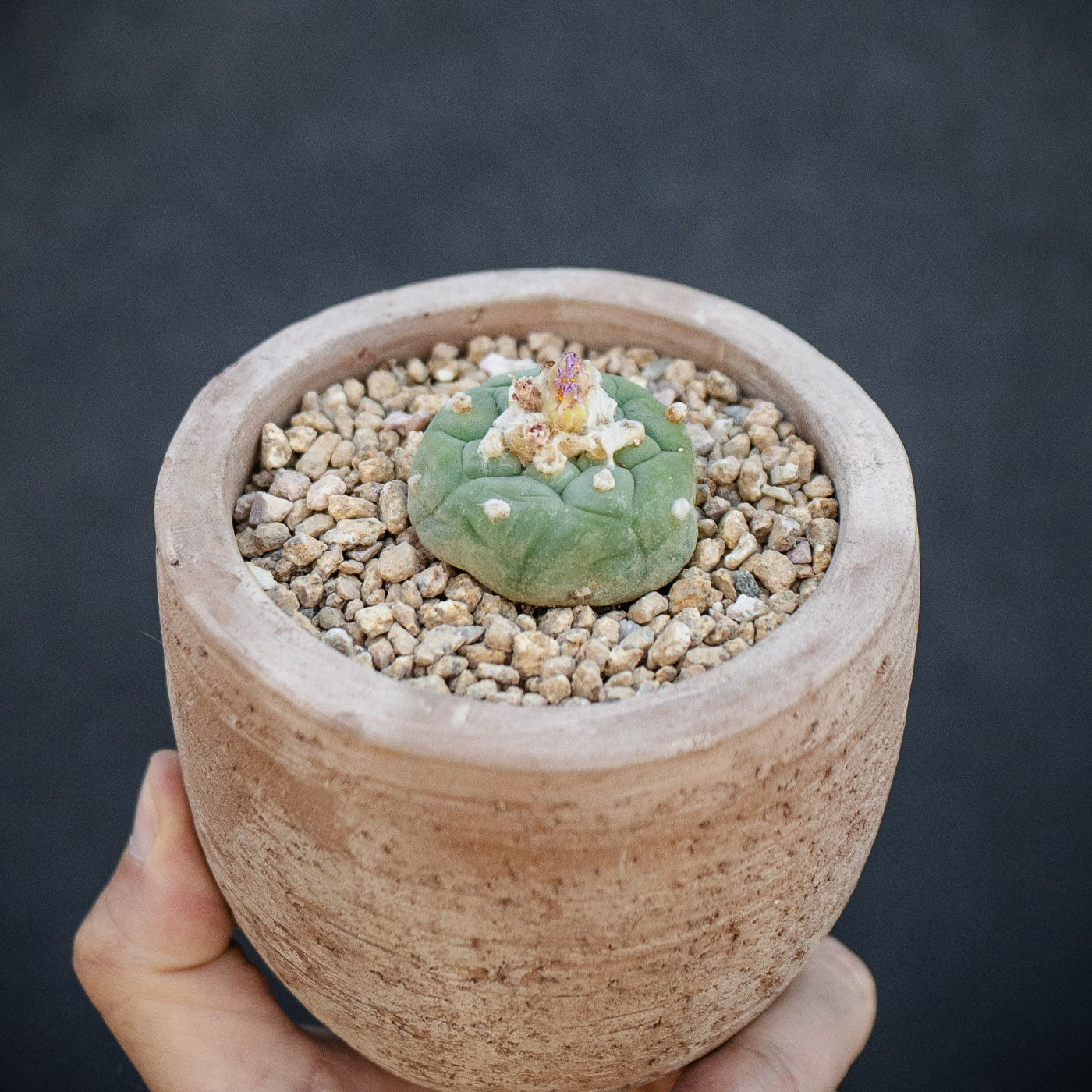
Lophophora williamsii var. fricii
Acquired4 months ago5/24/2026
Notes
This plant is a true summer grower, aligning its main vegetative growth, taproot expansion, and cellular metabolism with the high temperatures and monsoonal thunderstorm rains of northeastern Mexico. It kicks off its reproductive cycle in late spring and blooms intermittently throughout the summer, producing large, vibrant pink-to-deep-carmine flowers from the densely woolly apex—a distinct contrast to the smaller, pale pink flowers of L. williamsii. As the autumn temperatures drop, it enters a deep, defensive winter dormancy, pulling its subterranean body tight against the limestone grit. In cultivation, its large, fleshy taproot is exceptionally vulnerable to root rot; it demands an alkaline, highly porous, mineral-heavy substrate (like 80% to 90% pumice, crushed limestone, and granite) and should be watered only when the pot is completely dry during the heat of summer, keeping it bone-dry and cool throughout winter.
Origin
This distinct species/variety is native to a highly localized geographic range in the state of Coahuila, primarily concentrated in the semi-arid limestone hills and low rocky basins surrounding the town of Viesca, within the southwestern part of the Bolson de Mapimí. Unlike the classic L. williamsii, which prefers flatter, alluvial plains, this variant is an obligate limestone specialist (calcicole) that grows nestled into steep, rugged rocky slopes, limestone fissures, and gypsum-rich gravel fields. The plants are solitary or cluster-forming globose stem succulents with a distinct yellowish-green to grey-green epidermis, completely lacking true spines, and are heavily characterized by numerous narrow, spiraling, and deeply notched ribs.
Note: Coordinates indicate a general region for educational purposes and are not exact locations. Please do not use them for collection or poaching.