2026/05/22
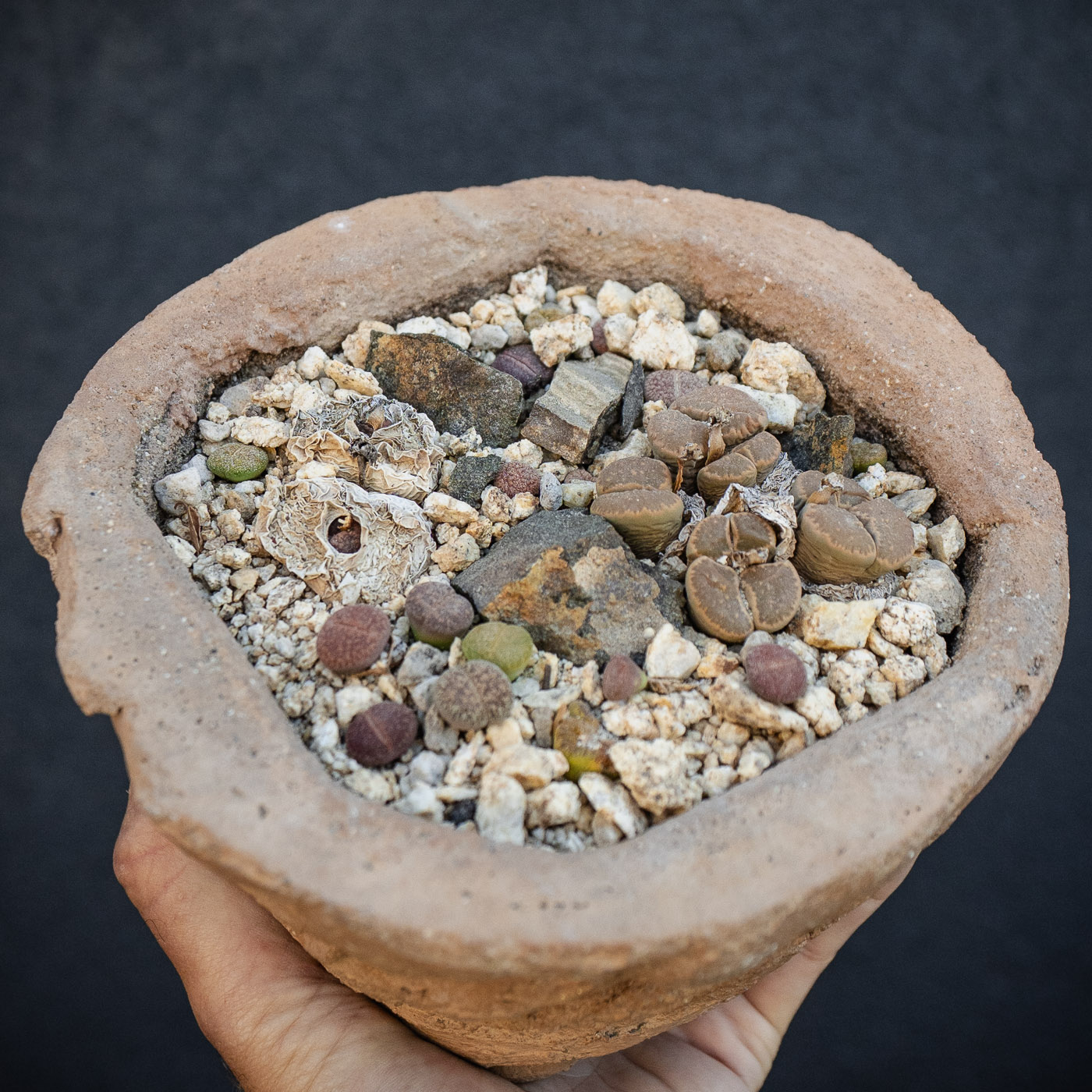
Lithops sp
Living Stones
Acquired4 months ago5/21/2026
PotterPrickly Point
Notes
While specific growth windows fluctuate slightly between northern and southern species, the genus universally operates on a highly strict, non-negotiable split developmental cycle. They initiate vegetative cellular activity during the heat of summer, leading to late-summer and autumn blooms of daisy-like yellow or white flowers.
The critical phase occurs during winter and early spring: the plants enter a dynamic internal rest where they must not receive a single drop of water. During this dry winter phase, the outer pair of leaves slowly wrinkles as the plant transfers all of its stored moisture and nutrients to regenerate a brand-new pair of leaves developing deep inside the core.
In cultivation, they are incredibly unforgiving of improper watering; they require a radically lean, inorganic substrate (like an 80% to 90% pumice and granite grit mix) and must be kept bone-dry until the old, outer leaves have completely shriveled into paper-thin husks in late spring. Water should only be applied thoroughly when the new leaf pair is fully established and shows signs of wrinkling during the warm months.
Origin
Southern Africa. The genus Lithops is widely distributed across the vast, hyper-arid regions of South Africa and Namibia, spanning the Namib Desert, the Great and Little Karoo, and the northern Cape provinces. They are specialized obligate crag and plain dwellers, growing embedded flush with the ground in formations of quartz, sandstone, shale, and calcrete gravel. Their structural design is a masterclass in evolutionary camouflage (crypsis): each plant consists of a single pair of translucent, fleshy leaves that mimic the exact color, texture, and mineral patterning of the specific rocks surrounding them to escape predation and survive extreme desert heat.
Note: Coordinates indicate a general region for educational purposes and are not exact locations. Please do not use them for collection or poaching.