2026/05/14
Ledebouria socialis cv. Miner
Dwarf Silver Squill
Acquired5 months ago4/25/2026
Notes
Unlike many of the winter-growing South African bulbs, this species is most active during the warmer months. It follows an opportunistic growth cycle that kicks into high gear in the spring and continues through the summer as long as water is available. During this time, it produces tiny, bell-shaped green flowers with purple stamens on delicate stalks. As temperatures drop in late autumn, the plant often enters a semi-dormant state where growth stalls, though it rarely loses its leaves entirely in mild climates like Southern California.
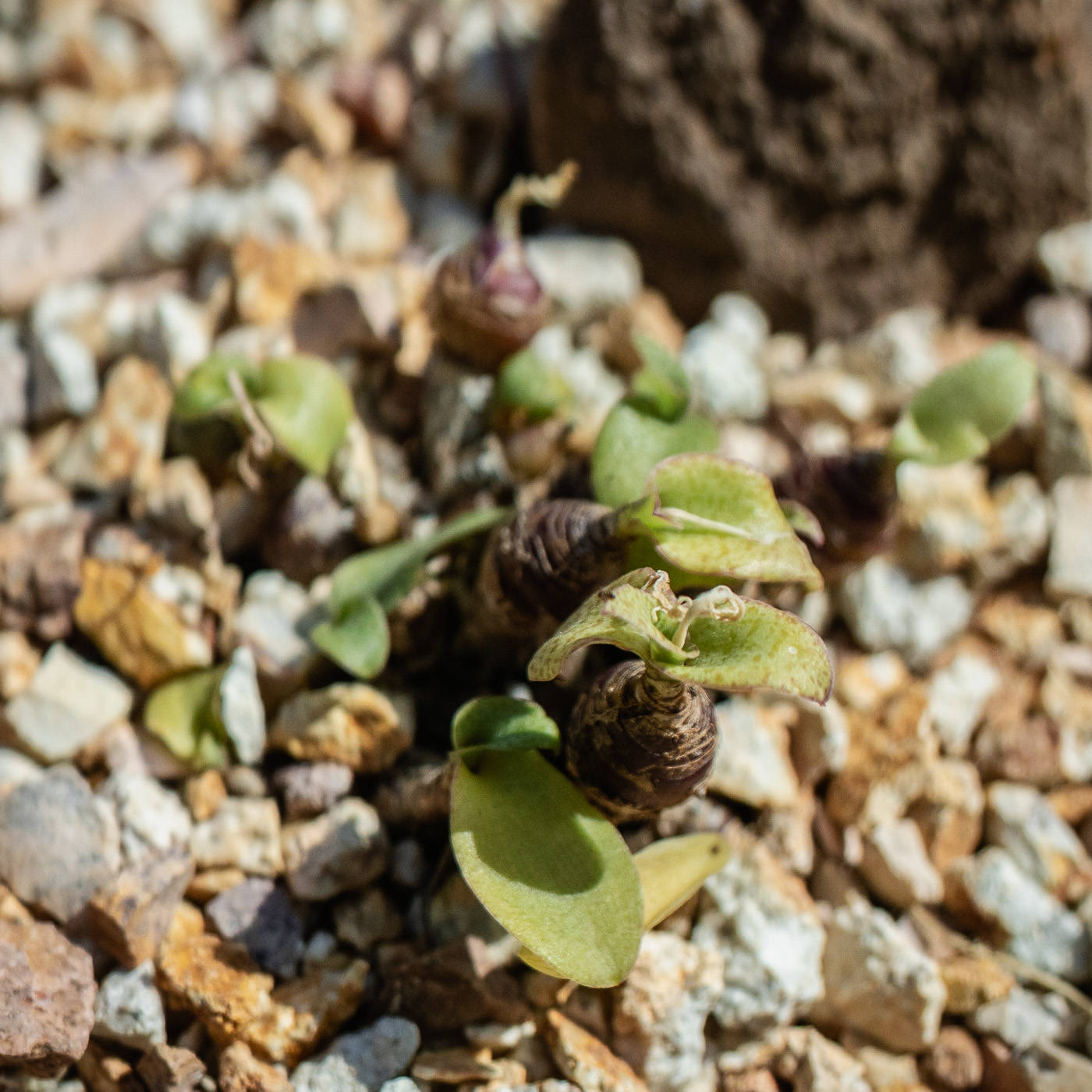
In cultivation, this dwarf cultivar is exceptionally hardy but requires very specific drainage to maintain its miniature proportions. It thrives in a mineral-heavy substrate—such as the 80% pumice and 20% organic ratio—which prevents the bulbs from rotting and encourages the development of the characteristic silver and violet mottling on the foliage. Because the bulbs of the "Miner" cultivar are so small and sit mostly above the soil line, they are susceptible to desiccation if left completely dry for too long during the peak of summer. It prefers bright, filtered light; too much direct sun can scorch the delicate leaves, while deep shade will cause the silver patterning to fade and the plant to become leggy. To achieve the best "mounded" look, it should be grown in a shallow container that allows the bulbs to cluster and spill over the edges.
Origin
This cultivar is a compact selection of the species Ledebouria socialis, which is native to the Eastern Cape Province of South Africa. In its natural habitat, the species is found in the summer-rainfall regions of the Albany Thicket, typically growing in the shade of evergreen shrubs or tucked into rocky crevices along river banks. The plants grow from surface-level or partially buried bulbs, which act as water storage organs to survive periods of drought. The "Miner" cultivar was specifically selected for its significantly smaller, more globose bulbs and shorter, stouter leaves compared to the standard form, allowing it to form very dense, miniature carpets in the grit.
Note: Coordinates indicate a general region for educational purposes and are not exact locations. Please do not use them for collection or poaching.