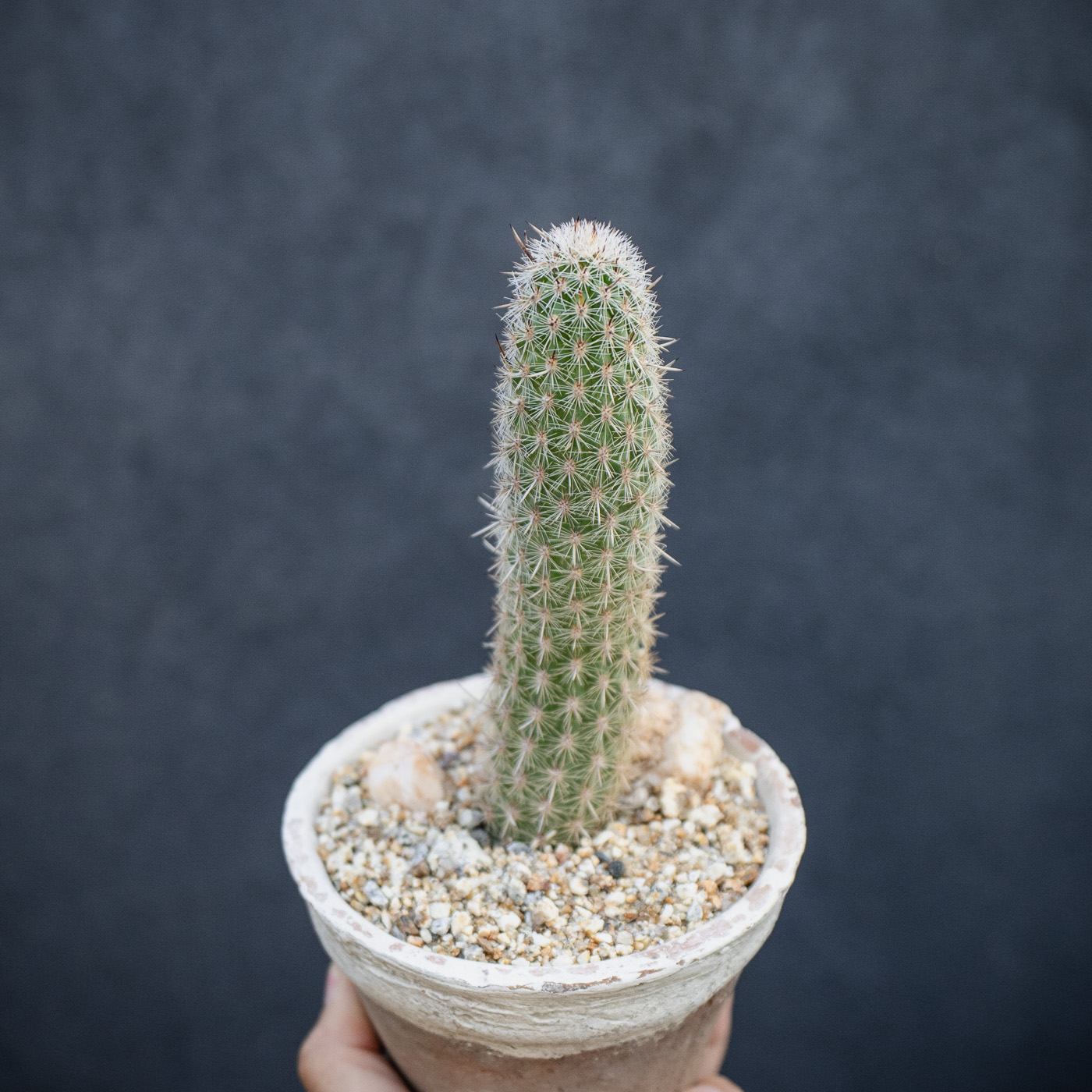
Haageocereus tenuis
Acquired25 days ago9/23/2026
Field Data
SAA 061Field NumberSAA 061
Notes
Evolving in a severe coastal desert where measurable rainfall might only occur once every couple of years, this species survives almost entirely by capturing humidity from the garúa—the dense, seasonal sea fogs rolling off the Pacific. In a coastal Zone 10b environment, this critically endangered species requires a highly specialized approach. To replicate the sterile, shifting coastal sands of its native habitat, it demands an uncompromisingly fast-draining, highly porous mineral substrate—such as a heavily inorganic 80% to 90% volcanic pumice blend cut with coarse sand and crushed quartz. Because it naturally roots along the length of its prostrate stems, it is best housed in a wide, shallow, breathable raw cement planter rather than a traditional deep pot, allowing it to sprawl horizontally. While it appreciates the protective diffusion of shade cloth, a solid polycarbonate roof is absolutely critical year-round to strictly block out unpredictable winter rains, enforcing a completely bone-dry resting period when the plant is not actively growing.
Origin
Peru. This exceptionally rare, critically endangered cactus is endemic to a hyper-restricted coastal zone north of Lima, specifically in the extremely arid lomas costeras (coastal fog oases) between Chancay and Huacho. The SAA061 field collection number marks a specific gathering from this fragile population. Unlike the towering columnar cacti typical of the Andes, H. tenuis is a creeping, prostrate species adapted to shifting sand dunes. It grows entirely on its side with slender, bluish-green stems densely covered in minute greyish and dark central spines, often half-buried in wind-blown sand and fragmented seashells. As the stems trail across the dune, they develop adventitious roots along their lower margins to capture whatever fleeting moisture is available, while the older basal sections slowly decay.
Note: Coordinates indicate a general region for educational purposes and are not exact locations. Please do not use them for collection or poaching.