2026/06/19
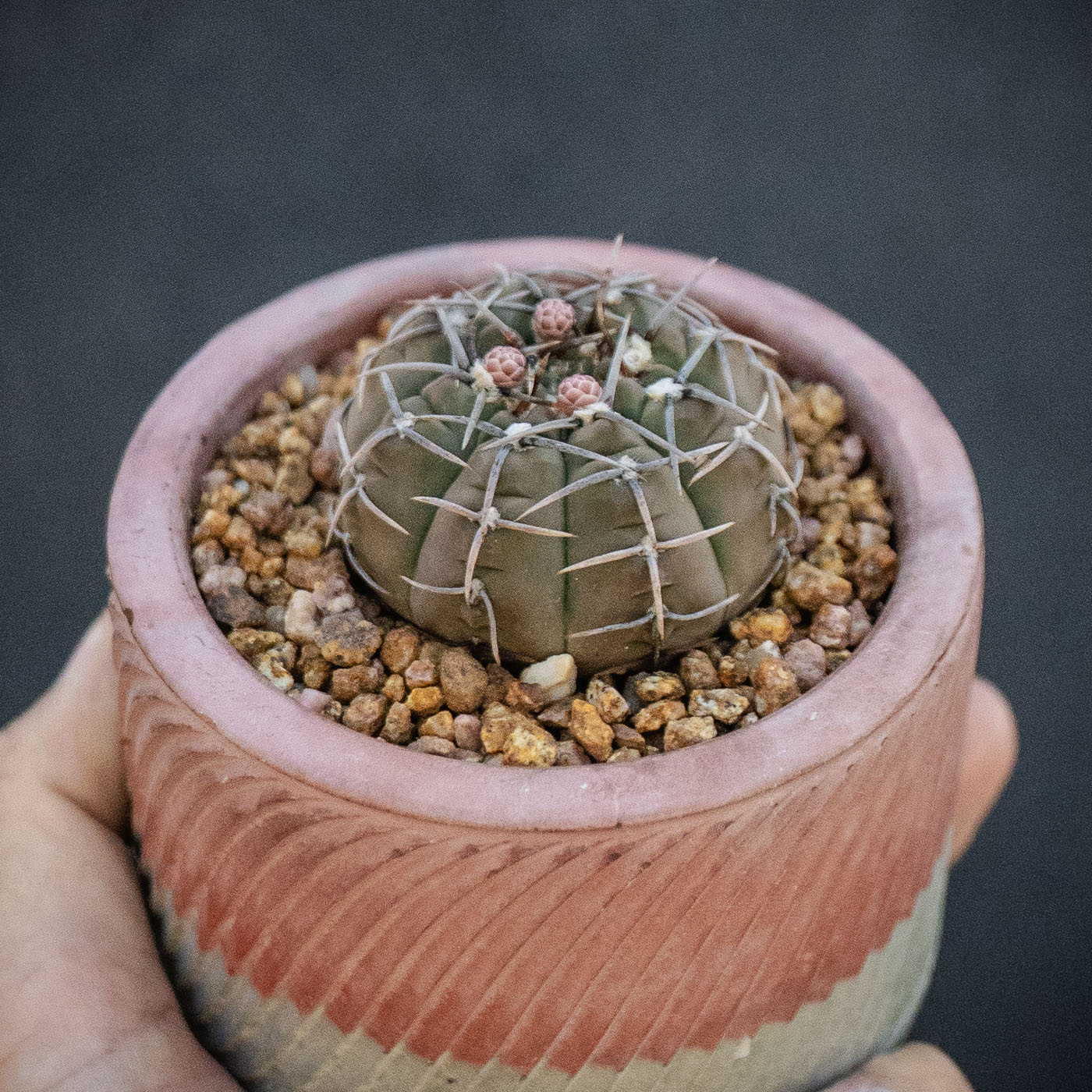
Gymnocalycium triacanthum
Acquired3 months ago6/18/2026
PotterPrickly Point
Notes
This species functions as a classic summer grower, driving its main metabolic activity and structural development during the warm spring and hot summer months, which align with the monsoon rainfall patterns of central Argentina. In late spring and throughout the summer, it pushes relatively large, elegant, satin-textured flowers that range from creamy-white to pale pinkish-tan with a deeper brownish-red throat from the apical areoles. During the cold winter months, the plant drops into a deep structural dormancy, contracting significantly into the substrate to survive the drought. In cultivation, it requires a highly porous, well-aerated mineral substrate (such as 80% premium pumice, decomposed granite, and a touch of loam) and must be watered thoroughly only during warm weather when the potting medium has dried out completely, maintaining a strictly dry and frost-free winter rest.
Origin
Argentina. This highly sought-after, flat-bodied cactus is endemic to the arid, rocky plains and low hillsides of the Sierra de Argañaraz in the La Rioja and Catamarca provinces. Growing at elevations between 400 and 600 meters, it lives hidden in the mineral-heavy soil, often sheltered beneath low thorn bushes or tucked among loose granite gravel. The species is highly distinct for its remarkably depressed-globose, flattened stem that grows nearly flush with the ground, showing a beautiful, dull grayish-green to velvety olive-brown or purplish epidermis. The name triacanthum refers to its minimalist spination: each small, gray-felted areole typically carries only 3 (rarely up to 5) short, stout, recurved spines that are pressed flat against the stem ribs like tiny claws, leaving the beautifully sculpted, chiseled body completely on display.
Note: Coordinates indicate a general region for educational purposes and are not exact locations. Please do not use them for collection or poaching.