2026/06/29
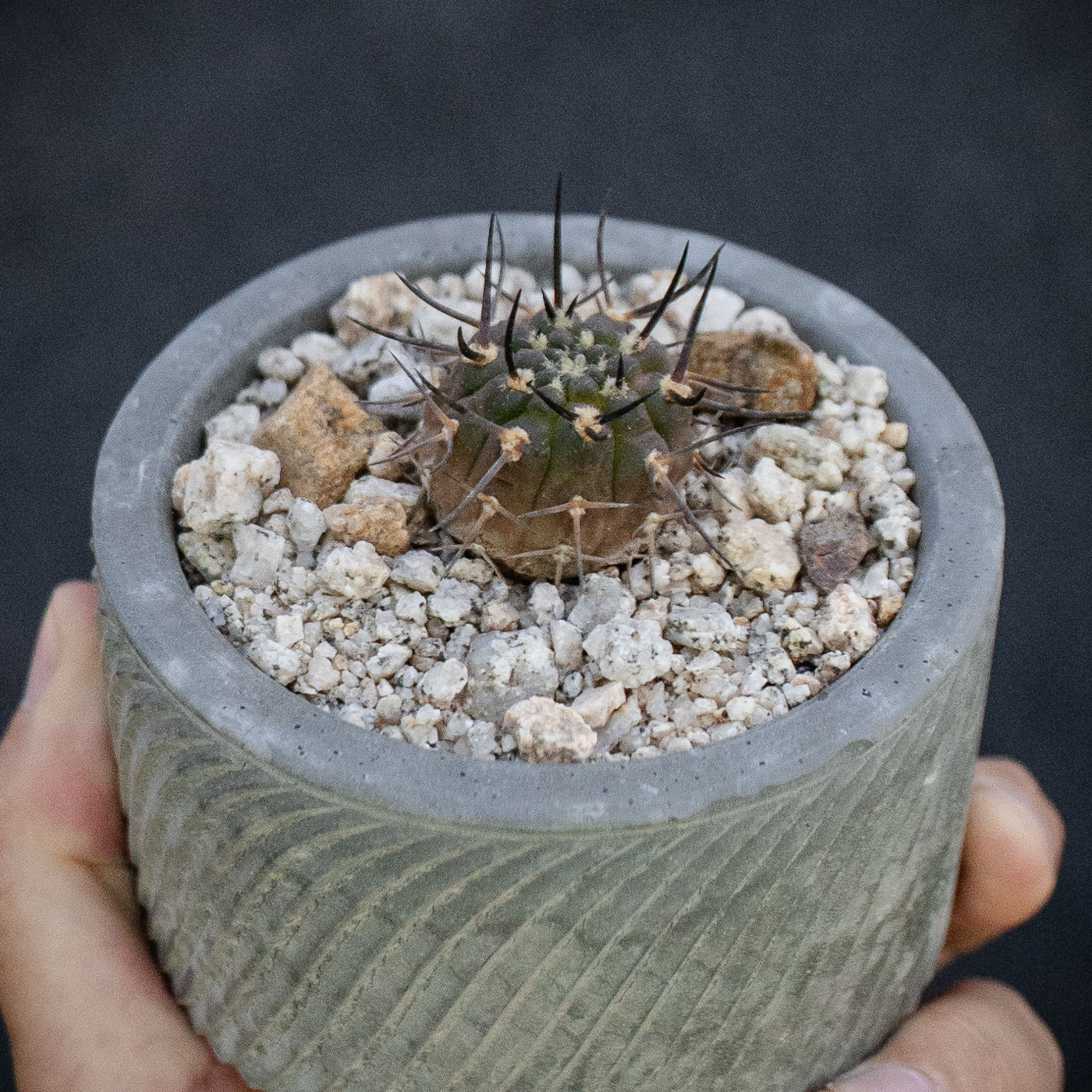
Gymnocalycium ochoterenae var. varispinum
Acquired3 months ago6/29/2026
Notes
This Argentine species functions as a strict summer grower, pacing its vegetative development, heavy spine production, and root expansion with the warm spring and hot summer months that bring periodic, heavy storms to its habitat. In late spring and early summer, it pushes relatively large, satin-textured, funnel-shaped flowers from the apex, ranging in color from a clean, creamy white to a pale pinkish-tan with a deeper, contrasting brownish-red throat. As winter approaches, the plant undergoes a profound dehydration phase, contracting deep into the potting medium to endure cold, freezing alpine drafts in a fully dormant state. In cultivation, it has an absolute intolerance for water-retentive, organic-heavy soil media or stagnant humidity. It demands an aggressively sharp-draining, mineral substrate (such as 80% to 90% premium volcanic pumice, coarse river sand, and decomposed granite) and must be watered thoroughly only during warm, buoyant weather when the medium has dried out completely, followed by a strictly dry and well-ventilated winter rest.
Origin
Argentina. This highly distinct, flat-bodied cactus is endemic to the arid, gravelly hillsides and rocky outcroppings of the San Luis and Córdoba provinces. Thriving in hyper-mineral conditions at moderate elevations, it grows tucked into coarse granite grit, clay-heavy fissures, or under the sparse shade of dry scrub vegetation. The variety is highly prized for its beautifully geometric, intensely solitary morphology. The stem is strongly depressed-globose, growing nearly flush with the surrounding soil and exhibiting a matte, velvety epidermis that ranges from an olive-green or chalky slate-grey to a rich, purplish-bronze under high light intensity. The name varispinum highlights its remarkably erratic, variable spination: rather than a uniform comb, its prominent, rounded "chin" tubercles are topped with few, highly irregular, stiff, and recurved spines. These thick, claw-like spines are typically horn-colored to dark grey with dark bases, turning outwards or flattening tightly against the ribs to leave the plant's heavily sculpted contours fully exposed.
Note: Coordinates indicate a general region for educational purposes and are not exact locations. Please do not use them for collection or poaching.