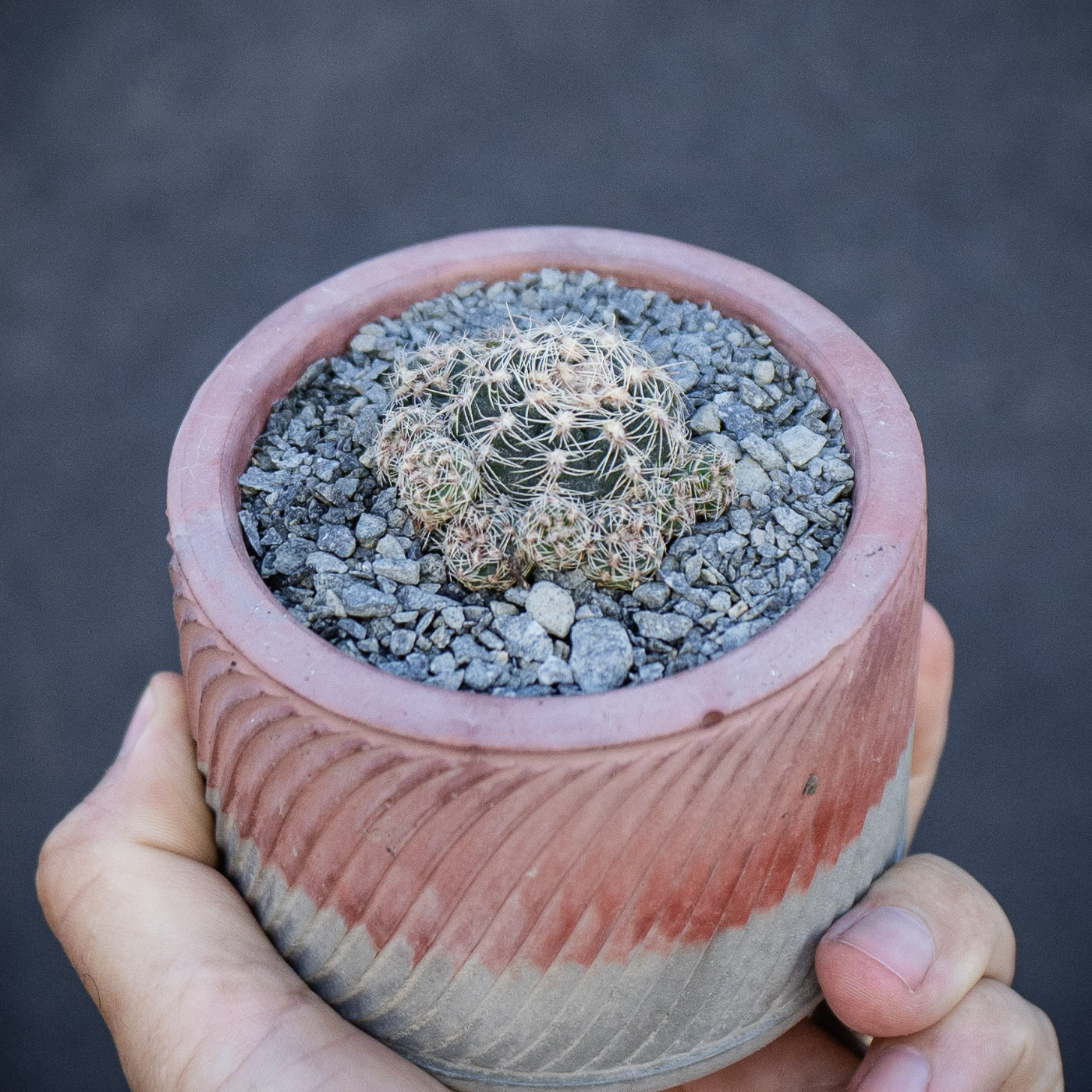
Gymnocalycium bruchii
Acquired17 days ago10/1/2026
PotterPrickly Point
Notes
Hailing from grassy, high-elevation granite outcrops that experience summer rainfall and cool mountain temperatures, this species is much more cold-tolerant than coastal tropical cacti. In a coastal Zone 10b environment, it thrives under morning sun or bright, indirect light under shade cloth, which protects its delicate stems from harsh, scorching afternoon rays. To match its mountain pasture soils while ensuring rapid drainage, cultivate it in an 80% mineral substrate composed of volcanic pumice, calcined clay, and coarse decomposed granite. Planting it in a wide, shallow, highly breathable raw cement pot accommodates its cluster-forming habit while preventing water from lingering around the crown. Water thoroughly during the active spring and summer growing season, allowing the soil to dry out between applications, and keep it strictly dry during a cool winter dormancy under a solid polycarbonate roof to protect against cold, stagnant rain.
Origin
Argentina. Endemic to the high-altitude grasslands, rocky granite ridges, and montane pastures of the Sierras de Córdoba and San Luis in central Argentina. In habitat, it grows at elevations between 1,000 and 2,000 meters above sea level, often tucked into rock fissures or sheltered under native mountain grasses. It forms dense, low-growing, freely offseting cushions composed of small, flattened-globose stems. The body is dark green to bronzed, featuring distinctly notched, tuberculate ribs. Its areoles are packed with bristly, pale glass-like white to cream radial spines that cross over the body, giving the plant a soft, webbed appearance. In early spring, it is among the first cacti to bloom, producing abundant, satiny pale pink to white, bell-shaped flowers.
Note: Coordinates indicate a general region for educational purposes and are not exact locations. Please do not use them for collection or poaching.