2026/05/22
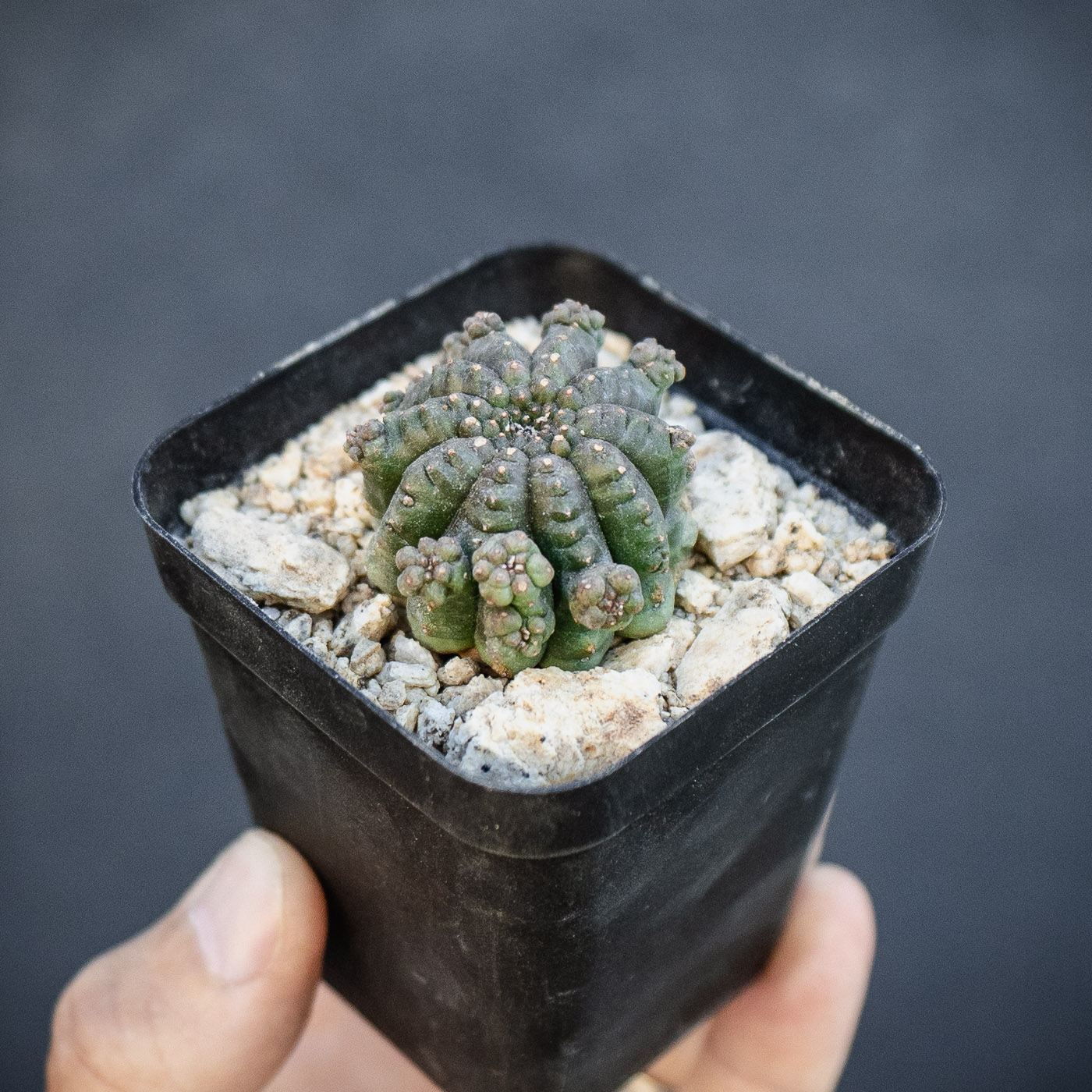
Euphorbia obesa cv. Kikko
Acquired4 months ago5/21/2026
Notes
This cultivar is a true summer grower, matching its main structural expansion and cellular growth with warm weather and long days. It pushes small, cup-like green-and-yellow cyathia (false flowers) from the apex during late spring and summer. As winter approaches and temperatures drop, it enters a sharp, defensive dormancy to prevent cellular damage and rot. In cultivation, this specialized selection is particularly sensitive to stagnant humidity and damp roots due to its dense, altered skin structure; it demands a lean, highly porous mineral substrate (such as 80% pumice and 20% organic matter) and must be watered only when the substrate is fully dry during summer, tapering off to absolute dryness over winter.
Origin
Cultivar origin (with wild roots in South Africa). The base species, Euphorbia obesa, is native to the harsh, semi-arid Great Karoo region near Graaff-Reinet in the Eastern Cape province, where it grows tucked among shale fragments and low karroid bushes. The highly coveted 'Kikko' variant is a specialized Japanese cultivar developed in cultivation. It is characterized by prominent, regular horizontal ribbing and dark, blocky tubercles that intersect the vertical ribs, creating a stunning geometric pattern that resembles a tortoise shell ("Kikko" translating to tortoise shell in Japanese). Like the wild type, it is a dioecious (having separate male and female plants), globose stem succulent that lacks true spines.
Note: Coordinates indicate a general region for educational purposes and are not exact locations. Please do not use them for collection or poaching.