2026/06/09
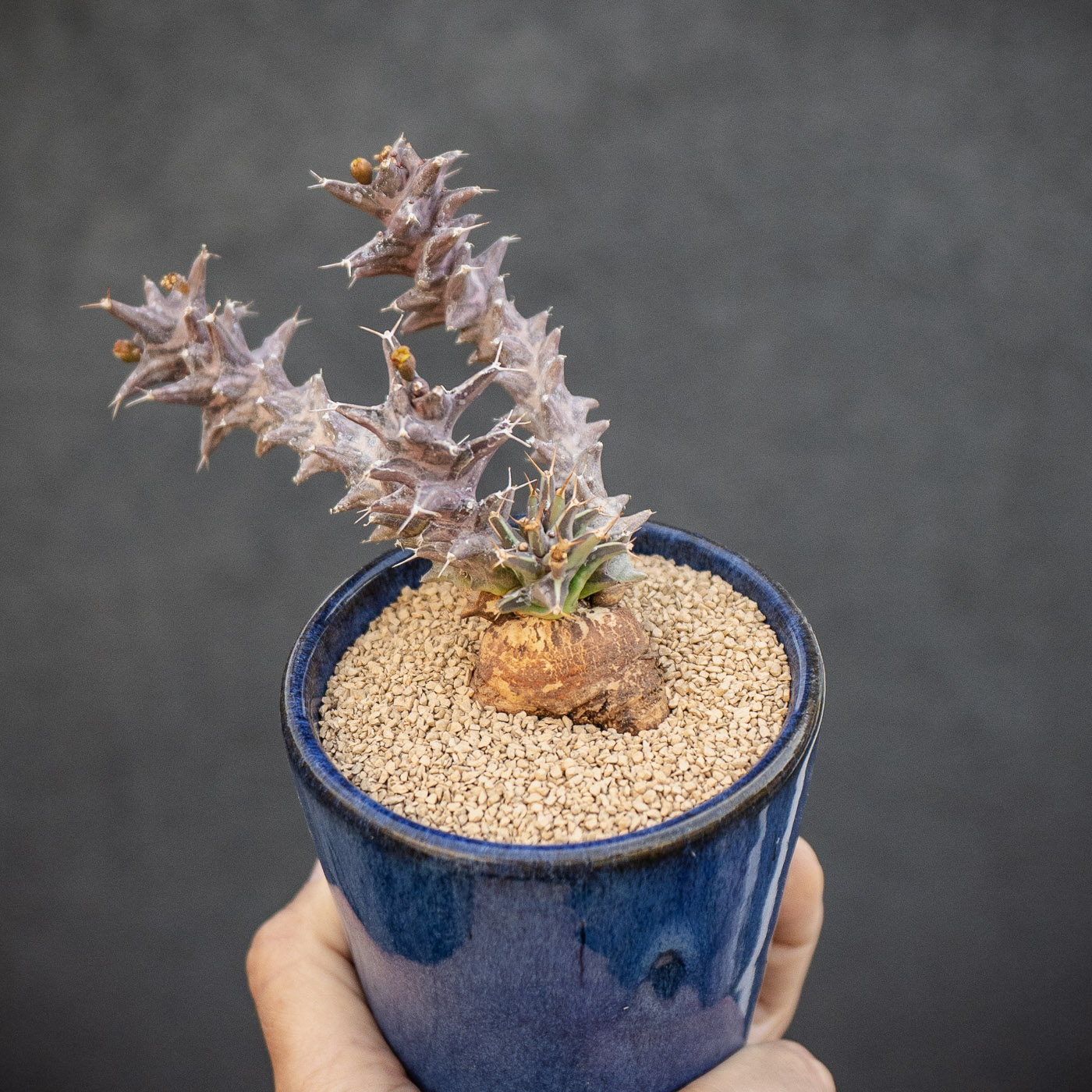
Euphorbia groenewaldii
Acquired4 months ago5/7/2026
Notes
This species follows a summer-rainfall growth cycle. It wakes up in late spring as temperatures rise, producing its small, yellowish-green cyathia and new vegetative growth throughout the summer months. It is particularly adapted to the high-heat, high-light environment of the Limpopo highlands.
During the dry winter months, it enters a deep dormancy. To survive the drought, the above-ground stems may shrivel or die back slightly as the plant retreats into its massive, protective caudex. In cultivation, it is extremely sensitive to moisture during the winter rest; the substrate must be kept bone-dry when temperatures drop to prevent the tuberous root from liquefying. It thrives in a very gritty, mineral-heavy mix—similar to the 80% pumice ratio used for high-end cacti—to ensure the caudex never sits in damp organic matter.
Origin
South Africa. It is a rare endemic found in a very restricted range within the Limpopo Province, specifically in the hills near Polokwane (formerly Pietersburg). It grows on rocky, north-facing slopes in "Bushveld" vegetation, often anchored in narrow crevices among quartzitic or granite rocks. The plant is famous for its spirally twisted, subterranean tuberous rootstock and its thin, wavy, grass-like branches that provide excellent camouflage.
Note: Coordinates indicate a general region for educational purposes and are not exact locations. Please do not use them for collection or poaching.