2026/05/14
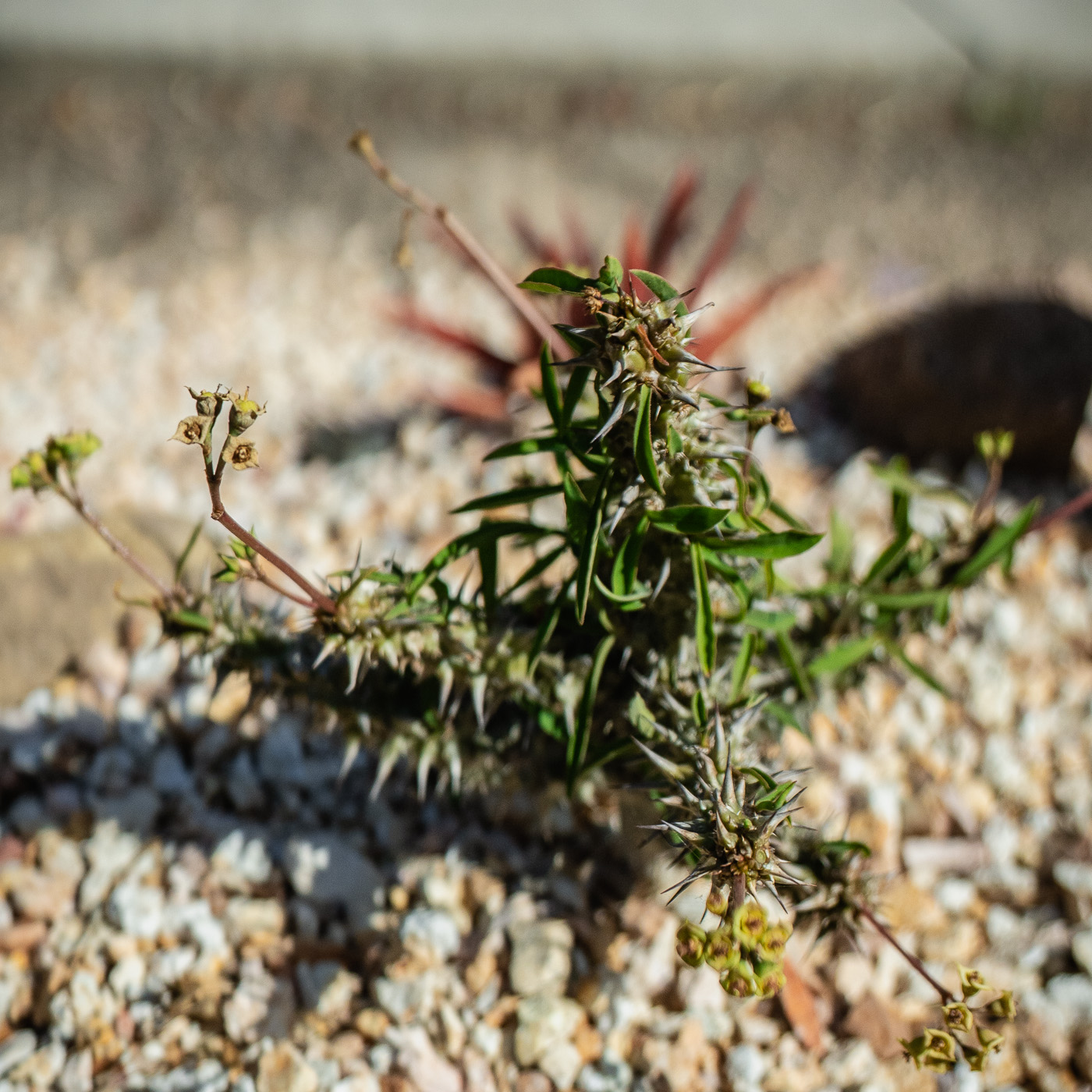
Euphorbia genoudiana
Acquired5 months ago4/25/2026
Notes
This species follows a growth cycle heavily influenced by the tropical dry forest climate of Madagascar. It is most active during the warm, humid months of spring and summer, which is when it produces its small, inconspicuous cyathia (flowers) surrounded by greenish-yellow bracts. As a drought-deciduous plant, it will often drop its leaves and enter a dormant state during the cool, dry winter months or during periods of extreme water stress as a survival mechanism to protect its succulent stems.
In cultivation, this Euphorbia is prized by collectors of Malagasy flora for its delicate, architectural form. It requires a very free-draining, mineral-dominant substrate to prevent root rot, making a mix of 80% pumice and 20% organic matter ideal for its needs. While it is relatively hardy, it is quite sensitive to cold, wet feet; during its winter dormancy, it should be kept almost entirely dry. To maintain its compact growth habit and encourage branching, it needs very bright, indirect light or filtered sun. Caution should always be exercised when handling the plant, as it contains the caustic white latex sap characteristic of the genus, which can be irritating to the skin and eyes.
Yellow flowers
Origin
This species is endemic to Madagascar, specifically the Toliara province in the southwest. It is primarily found in the dry, deciduous thickets and calcareous rocky plains near the coast. In its native habitat, it grows as a small, pachycaul shrub, often nestled among limestone rocks or within the "spiny forest" biome. Unlike its larger relative, Euphorbia xantii, which can become quite sprawling and shrub-like, Euphorbia genoudiana maintains a much more compact and manageable size, characterized by its thin, grayish-green branches and small, delicate leaves that appear primarily during the growing season.
Note: Coordinates indicate a general region for educational purposes and are not exact locations. Please do not use them for collection or poaching.