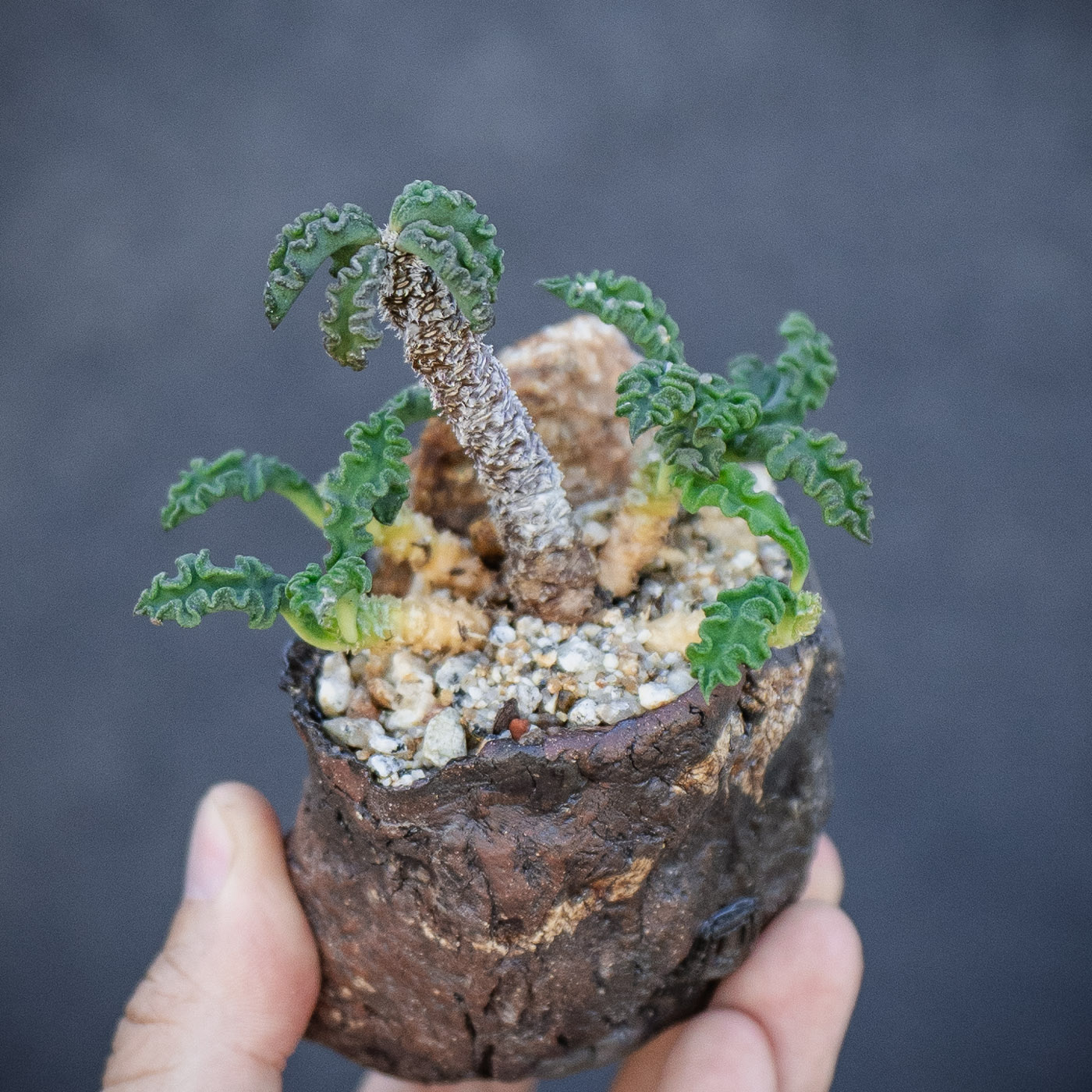
Euphorbia decaryi var. spirosticha
Acquired17 days ago10/1/2026
PotterUngrounded Objects
Notes
Adapted to the hot, distinct wet-and-dry seasonal cycles of southern Madagascar, this geophytic succulent is an active summer grower. In a coastal Zone 10b environment, it thrives outdoors under the protective diffusion of shade cloth, which brings out the rich, bronzed stress coloration of its crinkled leaves without scorching them. Because of its fleshy, spreading root system and semi-subterranean stems, it is highly susceptible to rot if left in cold, wet soil. It demands an uncompromisingly fast-draining mineral substrate—such as your standard gritty blend of 80% volcanic pumice cut with calcined clay and coarse decomposed granite. Cultivating it in a wide, shallow, breathable raw cement pot is ideal, as it accommodates the plant's creeping habit while rapidly wicking away excess moisture. Water deeply during the peak summer heat when active growth occurs, ensuring the soil dries out completely between applications, and enforce a strict, dry dormancy throughout the cool winter months, keeping it safely shielded from unpredictable seasonal rains beneath a solid polycarbonate roof.
Origin
Madagascar. Endemic to the harsh, dry spiny forests and rocky coastal scrub of southern and southwestern Madagascar. It grows as a low, mat-forming, creeping succulent, often establishing itself in rocky crevices or under the protective dappled canopy of larger xerophytic shrubs. This specific variety (spirosticha) is highly prized by collectors for its distinct, architectural foliage: deeply crinkled, zig-zagging leaves that range from deep green to a rich, coppery bronze under stress, growing in a tightly spiraled, rosette-like arrangement at the tips of rough, knobby, semi-subterranean stems. During the warm growing season, it produces small, bell-shaped, beige to pinkish-brown cyathia (flowers) that hang nodding from the apical growth.
Note: Coordinates indicate a general region for educational purposes and are not exact locations. Please do not use them for collection or poaching.