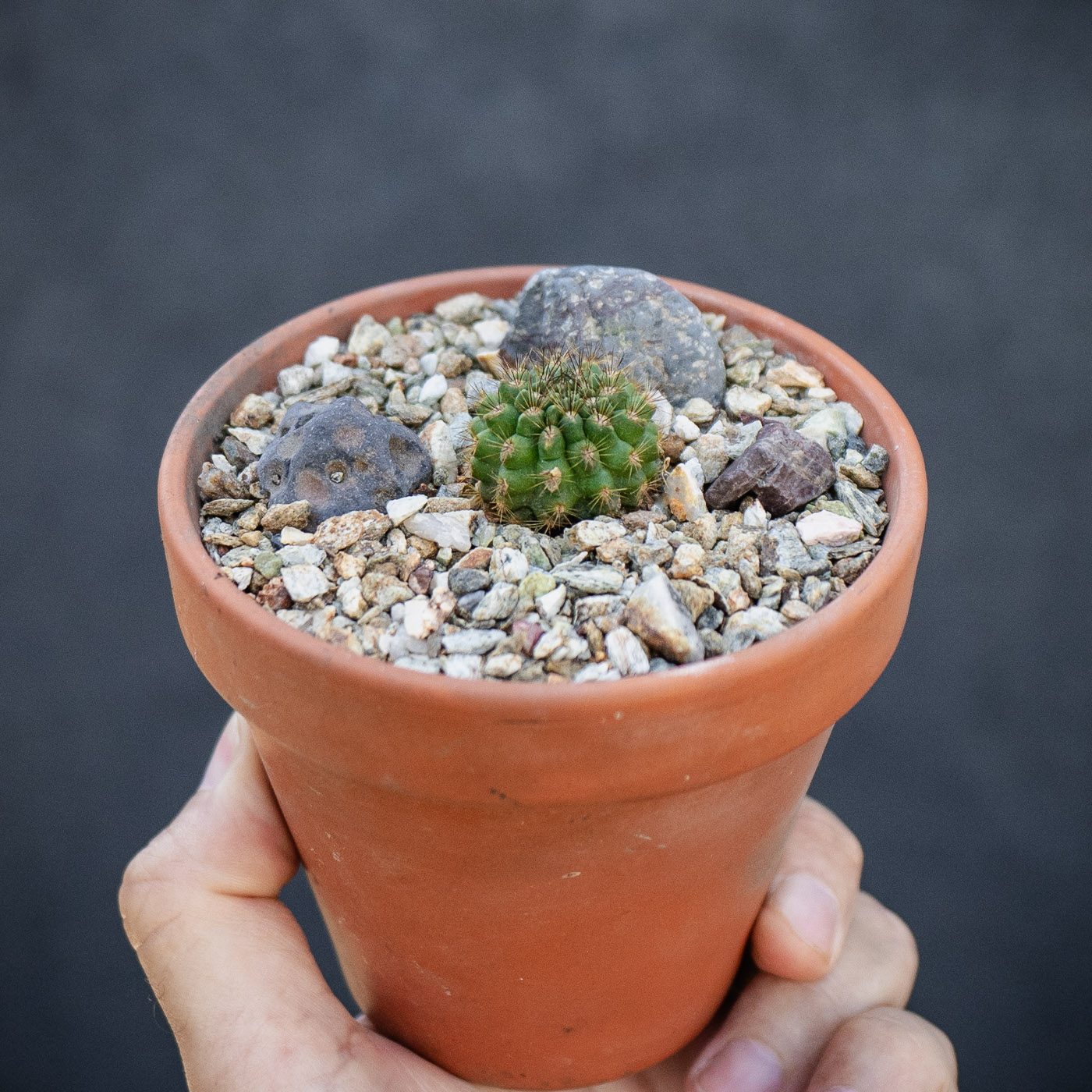
Eriosyce subgibbosa f. rapifera
Acquired24 days ago9/24/2026
Notes
Evolving in a mild coastal Mediterranean climate that receives cool winter rains and dry, foggy summers, this geophytic species begins its active growth cycle as temperatures drop in autumn. Because the rapifera form stores massive amounts of water in its turnip-like taproot, it is exceptionally susceptible to rot if overwatered. In a coastal Zone 10b environment, it demands a hyper-porous, sharply draining mineral substrate, making an 80% premium pumice blend perfectly suited to mimic the sandy coastal soils of its native habitat. Cultivating this specimen in a deep, hand-crafted raw cement pot is essential to accommodate the large taproot while rapidly wicking away excess moisture from the root zone. To protect the sensitive root system from unpredictable, heavy winter storms, it must be housed under a solid polycarbonate greenhouse roof, allowing you to manually control its moisture intake while still exposing it to the cool coastal air it needs to trigger its stunning spring blooms.
Origin
Chile. This highly specialized, geophytic form is endemic to the rugged coastal bluffs and sandy marine terraces of central-northern Chile, particularly around the Coquimbo and Valparaíso regions. While the standard Eriosyce subgibbosa is a more exposed coastal cactus, the rapifera form (meaning "turnip-bearing") is defined by its massive, tuberous taproot hidden deep beneath the soil to survive prolonged drought. Above the surface, it features a small, heavily armed globose to shortly cylindrical stem, protected by a dense, interlacing matrix of stiff, needle-like spines ranging from pale yellow to dark brown. In late winter or early spring, it pushes spectacular, vibrant magenta to carmine-pink tubular flowers with paler inner petals, a classic hallmark of the Neoporteria subgroup.
Note: Coordinates indicate a general region for educational purposes and are not exact locations. Please do not use them for collection or poaching.