2026/05/14
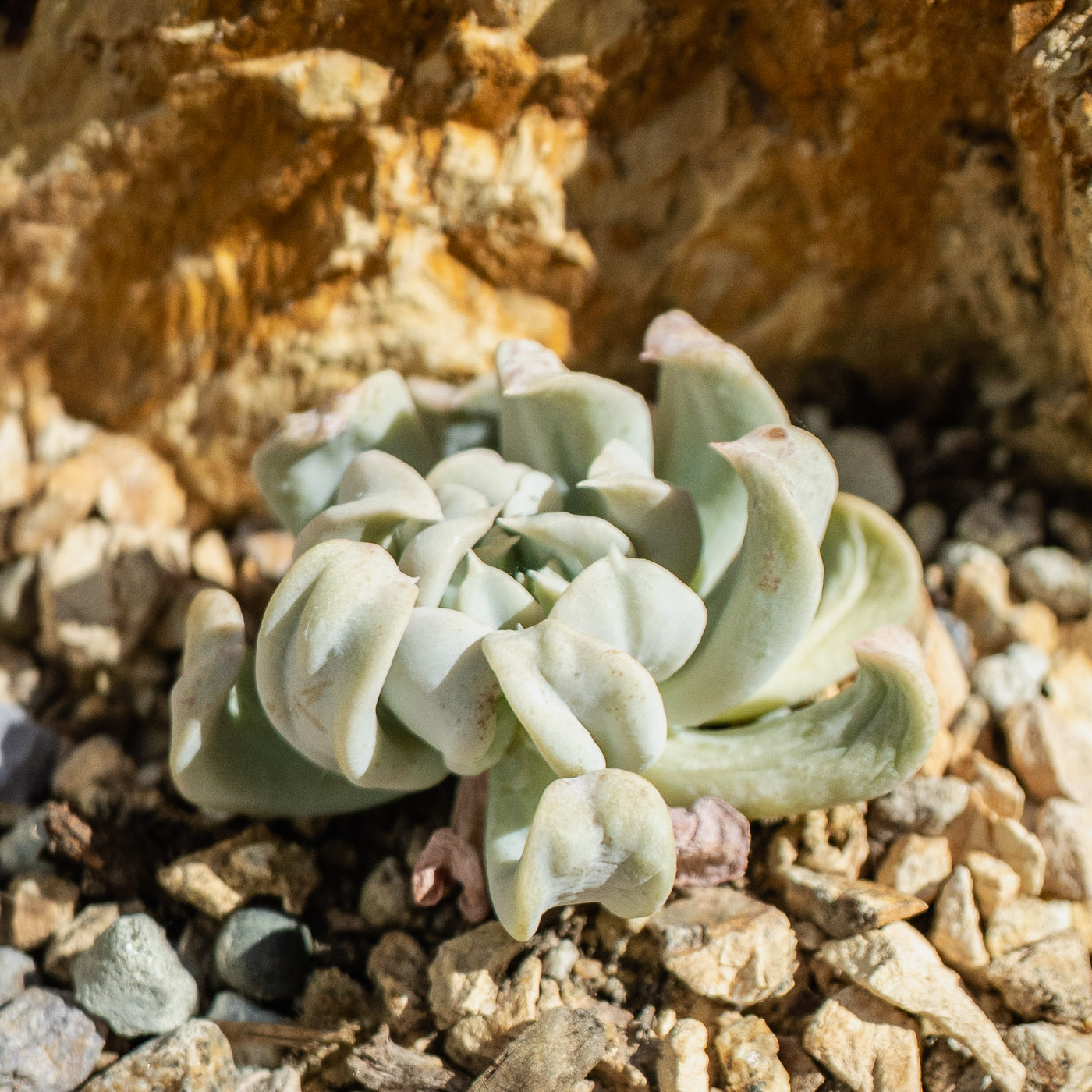
Echeveria runyonii cv. Topsy Turvy
Acquired5 months ago4/25/2026
Notes
A popular cultivar named by Myron Kimnack, who previously directed the Huntington Botanical Gardens. This variety was developed from a stable monstrose mutation of the original species.
Like its parent species, "Topsy Turvy" follows the typical Mexican highland growth cycle, favoring the cooler temperatures of the shoulder seasons. It is most active during the spring and autumn, which is when it produces its orange and yellow bell-shaped flowers on tall, arching stalks. While it is quite hardy and can grow during the summer months, it often enters a semi-dormancy during the most intense heat.
In cultivation, this cultivar is particularly prized for its rapid growth and prolific offsetting, often forming large, dense clumps in a relatively short amount of time. It requires a very gritty, mineral-heavy substrate—such as the 80% pumice and 20% organic ratio—to protect its sensitive root system from rot, which is its primary vulnerability. The unique shape of the leaves can easily trap water in the center of the rosette, making it susceptible to crown rot if overhead watering is used. It thrives in very bright light, which helps maintain the thick coating of silvery-white farina on the leaves, though it appreciates some protection from the harshest afternoon sun to prevent scorched leaf tips.
Origin
This is a stable mutation of Echeveria runyonii, which is native to the state of Tamaulipas in northeastern Mexico. Specifically, the species was discovered in the canyon of the Rio de la Purisima. In its native habitat, it grows on rocky limestone cliffs and steep slopes where drainage is instantaneous. The "Topsy Turvy" cultivar is a unique "monstrose" form where the leaves are inversely arched and fold back toward the center, creating a distinctively ruffled, architectural appearance that is not found in the wild-type species.
Note: Coordinates indicate a general region for educational purposes and are not exact locations. Please do not use them for collection or poaching.