2026/05/14
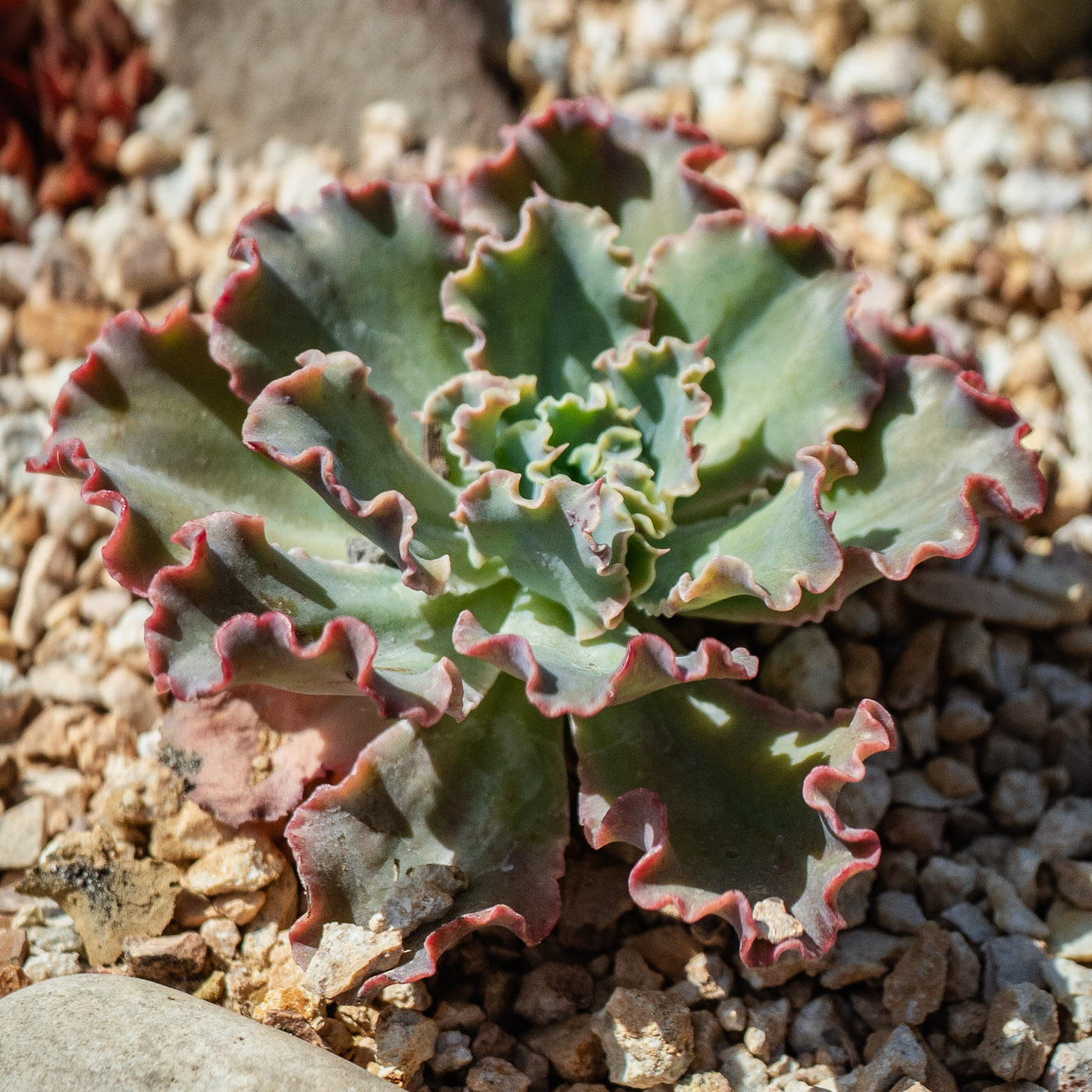
Echeveria gibbiflora hybrid
Acquired5 months ago4/25/2026
Notes
These large hybrids are most active during the cooler shoulder seasons. They grow vigorously in the spring and again in the late autumn as night temperatures drop, which is when their most intense pigmentation—ranging from deep teal to neon pink—tends to emerge. During the height of summer, they may slow down, especially if temperatures consistently exceed 90°F. Their flowering stalks are often massive, reaching several feet in height, and typically appear in late autumn or early winter.
In cultivation, these hybrids are heavy feeders compared to their smaller counterparts due to their sheer scale and rapid growth potential. However, they remain highly susceptible to stem rot if the soil stays saturated. They thrive in a high-mineral substrate—like the 80% pumice and 20% organic ratio—which allows the thick, woody stems to remain dry while providing the drainage necessary for their extensive root systems. Because of their large leaf surface area, they are magnets for powdery mildew in humid conditions, so excellent air circulation is vital. To keep the rosettes tight and prevent the plant from becoming "leggy" or losing its vibrant frills, they require very bright light, though the most intensely carunculated varieties may need light afternoon shade in searing inland heat.
Origin
This is a group of hybrids derived from the parent species Echeveria gibbiflora, which is native to the volcanic mountains and oak-pine forests of Central and Southern Mexico, particularly in states like Oaxaca, Puebla, and Morelos. In the wild, the species grows at high altitudes, often on shaded rocky outcrops or limestone cliffs. As a hybrid, these plants have been selectively bred—often with species like E. potosina or E. shaviana—to enhance their massive size, frilled leaf margins, and striking colors. Many of the most famous "giant" Echeverias, such as 'Mauna Loa' or 'Dick's Pink,' are gibbiflora hybrids that emphasize the parent's tendency to develop carunculations (bumpy, brain-like growths) on the leaf surfaces.
Note: Coordinates indicate a general region for educational purposes and are not exact locations. Please do not use them for collection or poaching.