2026/05/14
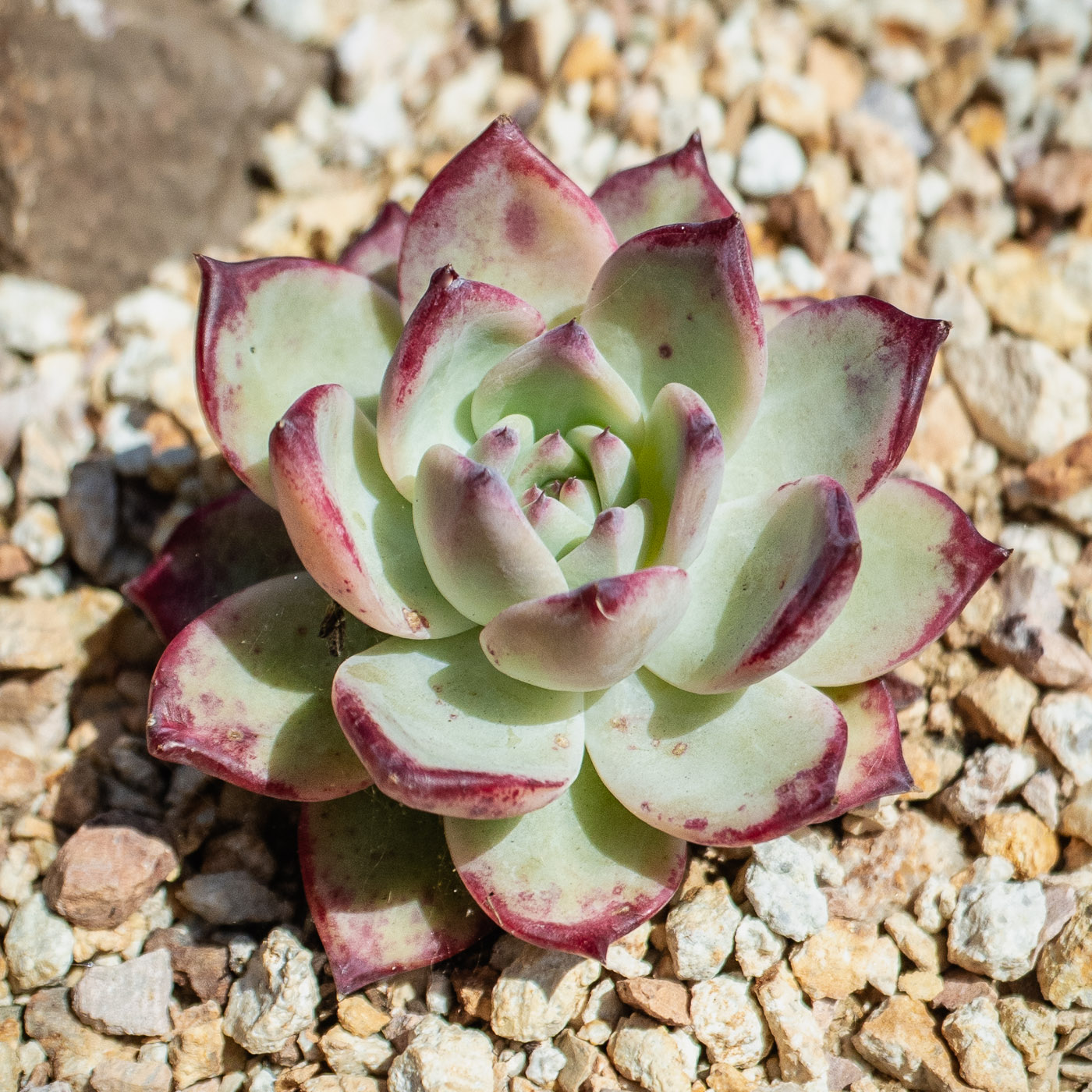
Echeveria colorata
Acquired5 months ago4/25/2026
Notes
Echeveria colorata follows a growth pattern typical of high-altitude Mexican succulents, favoring the moderate temperatures of the shoulder seasons. It is most active during the spring and autumn months, which is also when it typically produces its arching inflorescences of pinkish-orange, bell-shaped flowers. During the peak of summer, it may slow its growth to conserve moisture, while the winter months serve as a period of rest.
In cultivation, this species is highly valued for its elegant, symmetrical rosette and the powdery farina—a waxy coating—that protects its leaves from sunburn. It requires a very gritty, mineral-dominant substrate to prevent root and crown rot, especially in coastal or humid environments. A mix of 80% pumice and 20% organic matter provides the sharp drainage necessary to mimic its cliffside origin. To maintain the intense "blush" on the leaf tips and a tight, compact form, it needs very bright light. Watering should be deep but infrequent, allowing the substrate to dry out completely, with a significant reduction in frequency during the winter dormancy.
Origin
This species is native to the high-altitude volcanic mountains of western and central Mexico, specifically within the states of Jalisco, Michoacán, and Guanajuato. In its natural habitat, it is found clinging to rocky cliffs and steep slopes at elevations between 1,800 and 2,500 meters. These regions provide a climate characterized by bright, intense sunlight and significant temperature swings between day and night. The plant's thick, fleshy leaves and pointed, reddish tips are evolutionary adaptations to the high-UV environment and the necessity of storing water during the dry season.
Note: Coordinates indicate a general region for educational purposes and are not exact locations. Please do not use them for collection or poaching.