2026/06/08
Dudleya abramsii subs. abramsii
Abrams' Liveforever
Acquired4 months ago5/16/2026
Notes
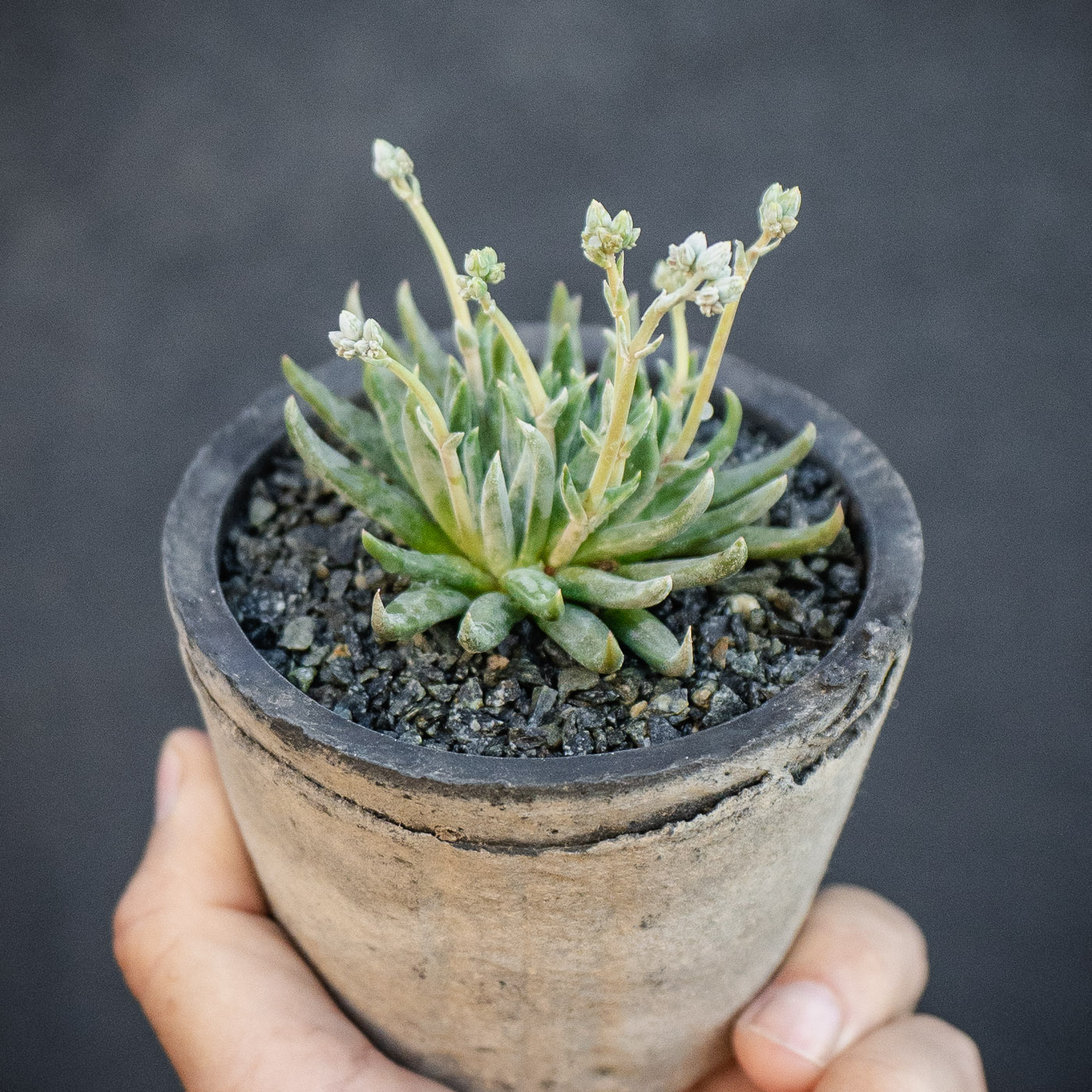
This subspecies is heavily adapted to a Mediterranean alpine climate, syncing its main vegetative growth and flowering with the arrival of cool winter rains and spring snowmelt. It pushes its pale yellow flowers on short, branched stalks from mid-spring to early summer. As the Southern California mountain backcountry dries out and bakes under the intense heat of mid-to-late summer, the plant enters a profound, protective dormancy—its outer leaves shrivel and turn paper-thin, forming a insulating sheath around the living core. In cultivation, it is highly susceptible to crown and root rot if watered when air temperatures are high; it demands an exceptionally sharp-draining, mineral-dominant substrate (like an 80% pumice and decomposed granite mix) and should be watered only during the cool months of winter and early spring, keeping it completely dry and shaded during its summer rest.
Origin
Southern California. This particular population is native to the Peninsular Ranges of San Diego County, specifically localized just southeast of the historic mountain town of Julian. It grows in a highly specialized alpine microhabitat, restricted to exposed, sun-bleached outcrops and fractures of fractured granite and pegmatite rock at elevations ranging from 1,000 to over 1,500 meters. The plants form small, highly compact, clustering rosettes of fleshy, lance-shaped leaves covered in a thick, chalky, chalk-white farina (waxy coating) that reflects intense ultraviolet light and prevents desiccation.
Note: Coordinates indicate a general region for educational purposes and are not exact locations. Please do not use them for collection or poaching.