2026/05/14
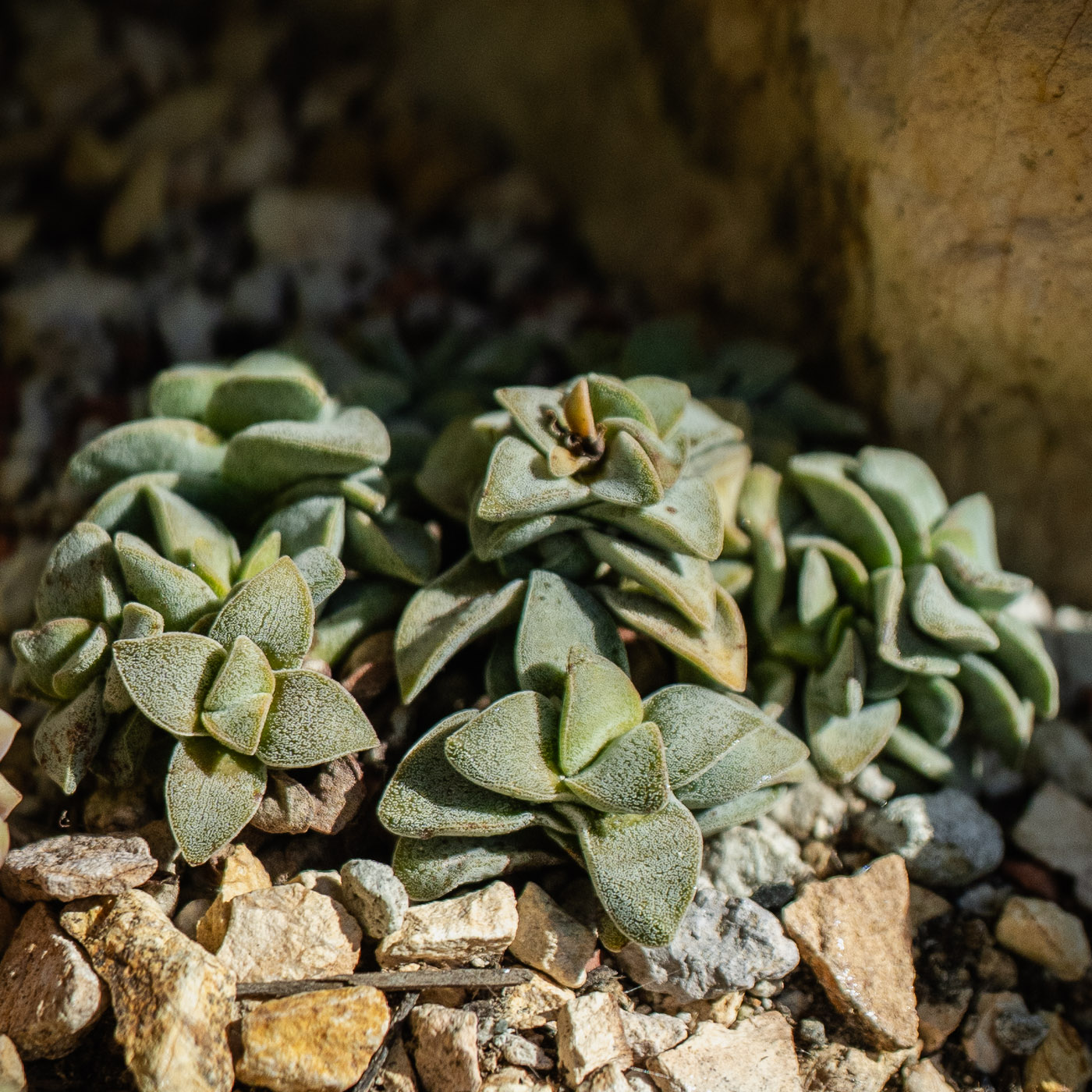
Crassula perfoliata x rupestris cv. Spring Time
Acquired5 months ago4/25/2026
Notes
As the name suggests, this cultivar is a specialist in early-season activity. It begins its primary growth phase and flowering cycle in late winter and peaks in early spring. During this time, the apex of each stem transforms into a dense cluster of starry blossoms. While it is opportunistic and can grow throughout the year in moderate climates, it tends to slow down during the peak of summer heat, especially if the air is stagnant.
In cultivation, "Spring Time" is prized for its architectural, stacked-leaf appearance. It requires a very well-draining, mineral-heavy substrate—such as the 80% pumice and 20% organic ratio—to accommodate its fine root system and prevent stem rot at the soil line. To maintain its tight, stacked form and prevent the stems from becoming "leggy," it needs very bright light, though it appreciates some protection from the harshest afternoon sun in inland California climates. Watering should be consistent during the blooming period but significantly reduced in mid-summer and winter to respect its natural cycles of rest.
Origin
This popular hybrid brings together two South African species with very different growth habits. Crassula perfoliata (often var. minor) is native to the rocky slopes of the Eastern Cape, known for its large, sickle-shaped leaves. Crassula rupestris (the Rosary Vine) originates from the arid Karoo and Namaqualand regions, where it grows in the crevices of quartzite krantz. The "Spring Time" cultivar was developed to merge the thick, succulent foliage of the former with the compact, clumping nature of the latter, resulting in a plant that produces massive, dome-like clusters of pale pink, scented flowers.
Note: Coordinates indicate a general region for educational purposes and are not exact locations. Please do not use them for collection or poaching.