2026/05/18
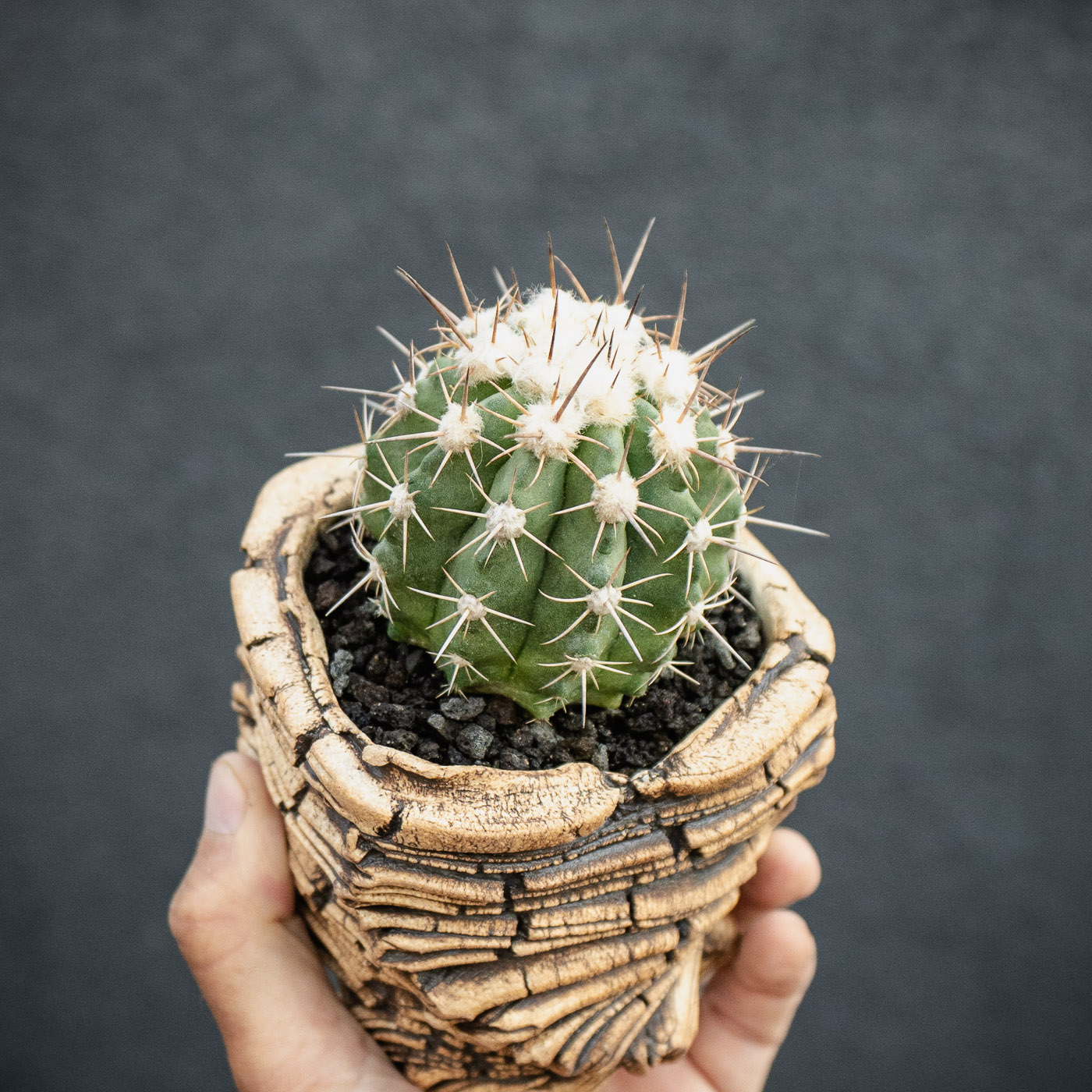
Copiapoa marginata
Acquired4 months ago5/16/2026
PotterSuccy Ceramics
Notes
Growing in a habitat with virtually zero annual rainfall, this species relies completely on the daily marine Camanchaca fog for its moisture. Its primary vegetative growth and metabolic activity occur during the cool, high-humidity months of late winter and spring, when the fog is most consistent. It enters a stagnant, protective dormancy to prevent desiccation during the intense dry heat of mid-summer. In cultivation, it demands a strictly inorganic, mineral-dominant substrate (such as 80% pumice and crushed gravel) to protect its sensitive taproot, and should be watered very lightly, focusing moisture exclusively on the cool shoulder seasons.
Origin
Northern Chile. It is endemic to the hyper-arid coastal cliffs and gravelly terraces of the Antofagasta region, particularly around the rocky headlands of Morro Moreno. It grows on steep, highly exposed slopes and coastal hillsides that face the Pacific Ocean, often anchored directly into rocky fissures. The plants are characterized by their cylindrical, heavily ribbed stems that eventually form large, multi-headed clumps, featuring a pale, pruinose epidermis that contrasts sharply with thick, dark, needle-like spines.
Note: Coordinates indicate a general region for educational purposes and are not exact locations. Please do not use them for collection or poaching.