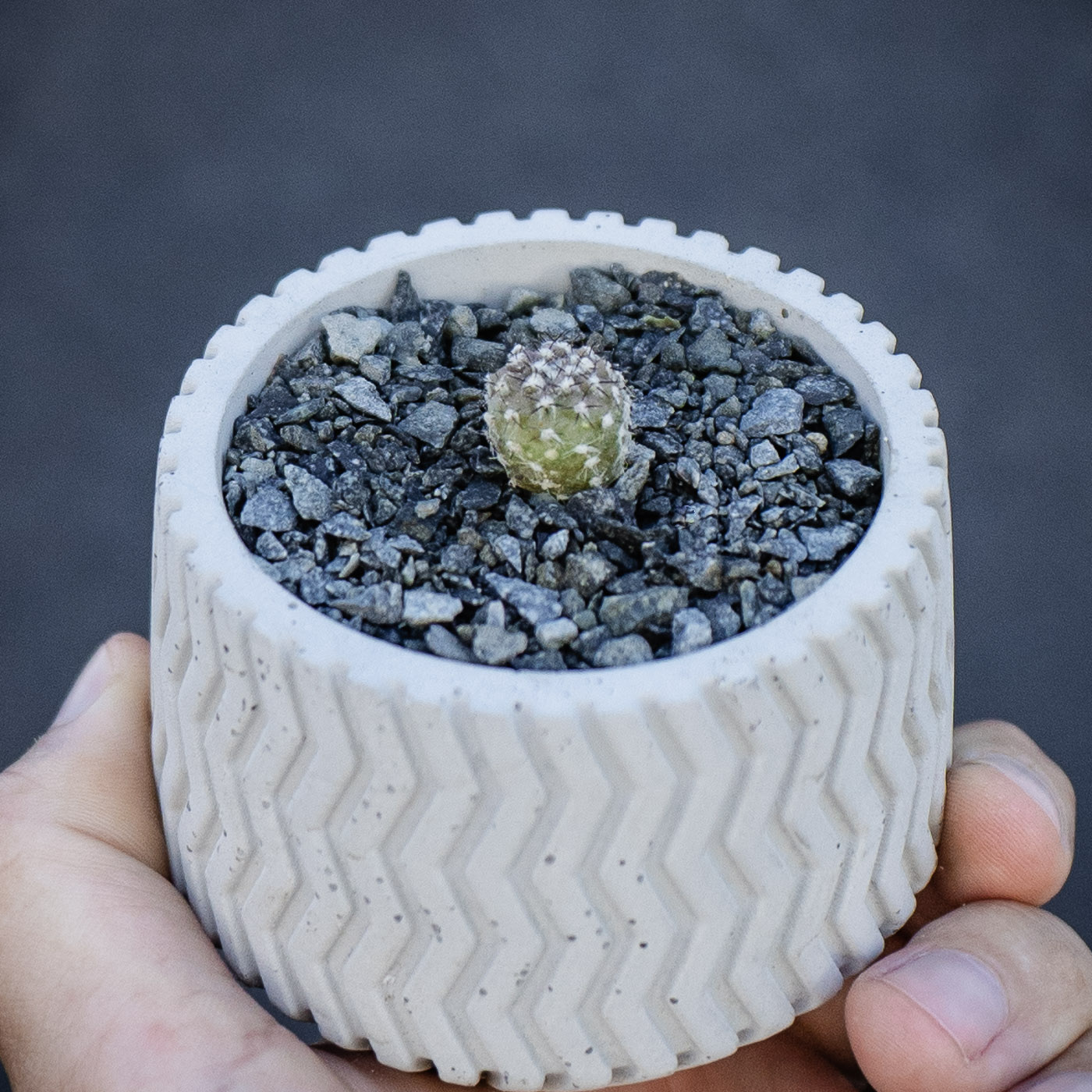
Copiapoa longistaminea
Notes
Native to a desolate coastal ecosystem where rain is almost non-existent, this species relies on moisture harvested from the cooling camanchaca fogs. In a coastal Zone 10b environment, maintaining strict mineral aridity and maximum sunlight exposure is critical to prevent stem bloating and basal rot. It demands an exceptionally porous, fast-draining mineral substrate, making an 80% premium pumice blend cut with coarse decomposed granite and calcined clay ideal to mimic the sterile, rocky scree of Esmeralda. Cultivating this mounding species in a wide, breathable raw cement pot gives its deep root system room to spread while rapidly wicking excess moisture away from the crown. Water should be applied conservatively only during warm summer stretches—allowing the substrate to dry completely between light soakings—and strictly withheld during a bone-dry winter rest beneath a solid polycarbonate roof to protect against cold seasonal rains.
Origin
Chile. Endemic to a highly restricted coastal zone within the hyper-arid Atacama Desert, primarily found in the coastal valleys and rocky terraces surrounding Esmeralda and extending into the northern portion of Pan de Azúcar National Park in the Antofagasta Region. In habitat, it forms spectacular, large multi-headed cushions and dense mounds comprising dozens of globose to short-cylindrical heads. The epidermis is a distinct greyish-green to glaucous-grey, protected by prominent, sharp-edged ribs. The species is named for its unusually prominent, elongated stamens that project from its satiny yellow flowers during the summer bloom. Its armature is exceptionally robust, featuring long, stiff, amber-brown to dark chestnut central spines that gradually weather to an ashy grey.
Note: Coordinates indicate a general region for educational purposes and are not exact locations. Please do not use them for collection or poaching.