2026/06/25
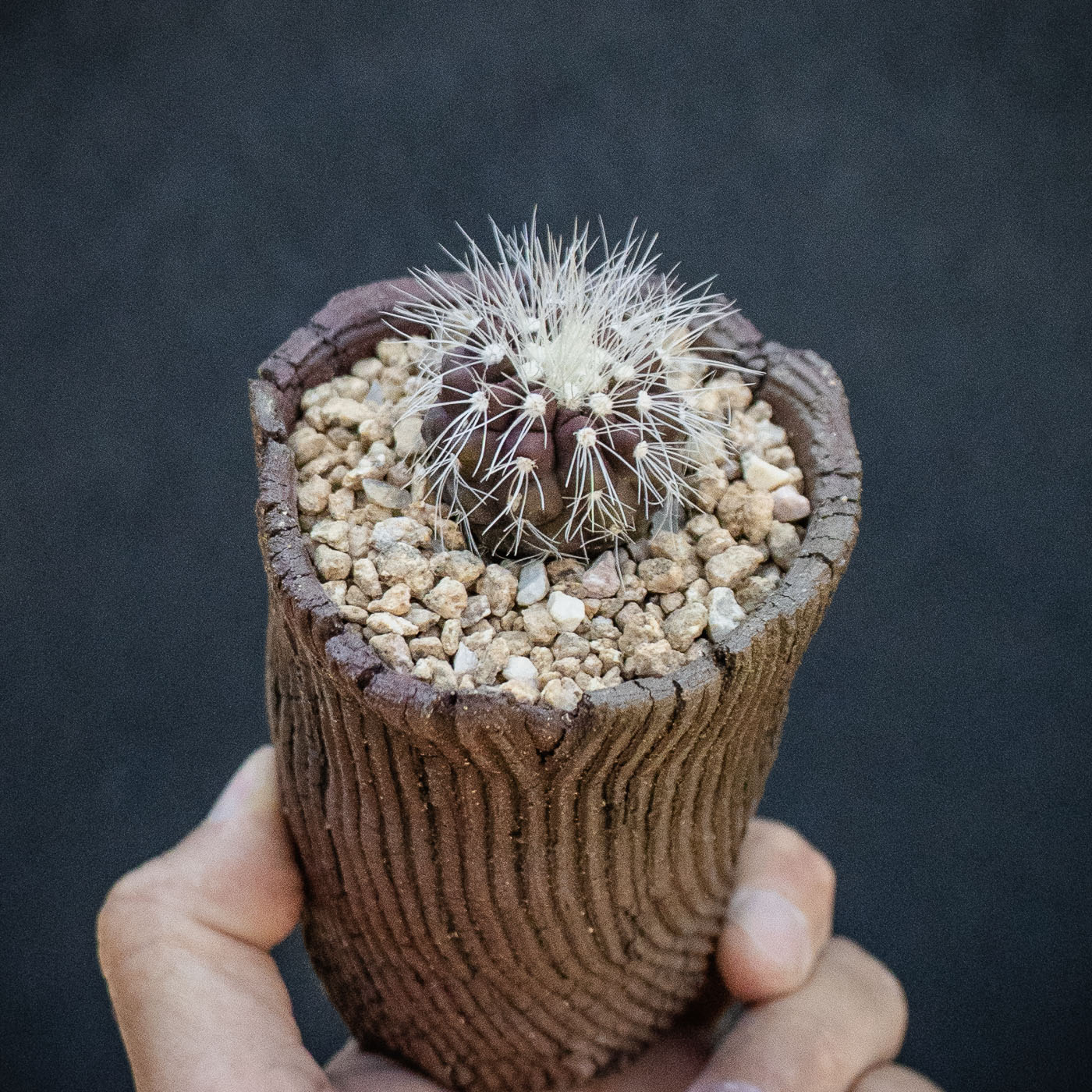
Copiapoa krainziana
Acquired5 months ago5/3/2026
PotterColibri Ceramics
Notes
Nestled slightly inland within a steep canyon system, this species relies entirely on the heavy Camanchaca fog that rolls off the Pacific ocean and forces its way up into the quebrada. The soft, dense canopy of white spines functions as a highly efficient moisture trap, catching the heavy airborne mist and channeling condensation down toward the root system. Its primary vegetative growth and metabolic processes occur during the cool, high-humidity months of late winter and spring. It enters a stagnant, defensive dormancy during the peak heat of summer. In cultivation, it demands a strictly mineral-dominant substrate (like an 80% pumice and crushed granite mix) to protect its highly sensitive roots from rot, and should be watered with a very disciplined hand only during the cool shoulder seasons.
Origin
Northern Chile. This spectacular and visually distinct species is endemic to an incredibly restricted locality north of Taltal, primarily occurring within the steep, rocky slopes and upper reaches of the Quebrada San Ramon in the Antofagasta region. It is easily identified by its dense covering of fine, soft, curving white-to-greyish spines that shroud the dark green epidermis underneath, giving the entire plant a woolly, frosted appearance. In habitat, it slowly forms massive, spectacular clustering mounds that can grow to over a meter across, contrasting sharply against the desolate, sun-baked landscape.
Note: Coordinates indicate a general region for educational purposes and are not exact locations. Please do not use them for collection or poaching.