Copiapoa hypogaea
2026/05/23
Copiapoa hypogaea
Acquired18 days ago5/16/2026
Notes
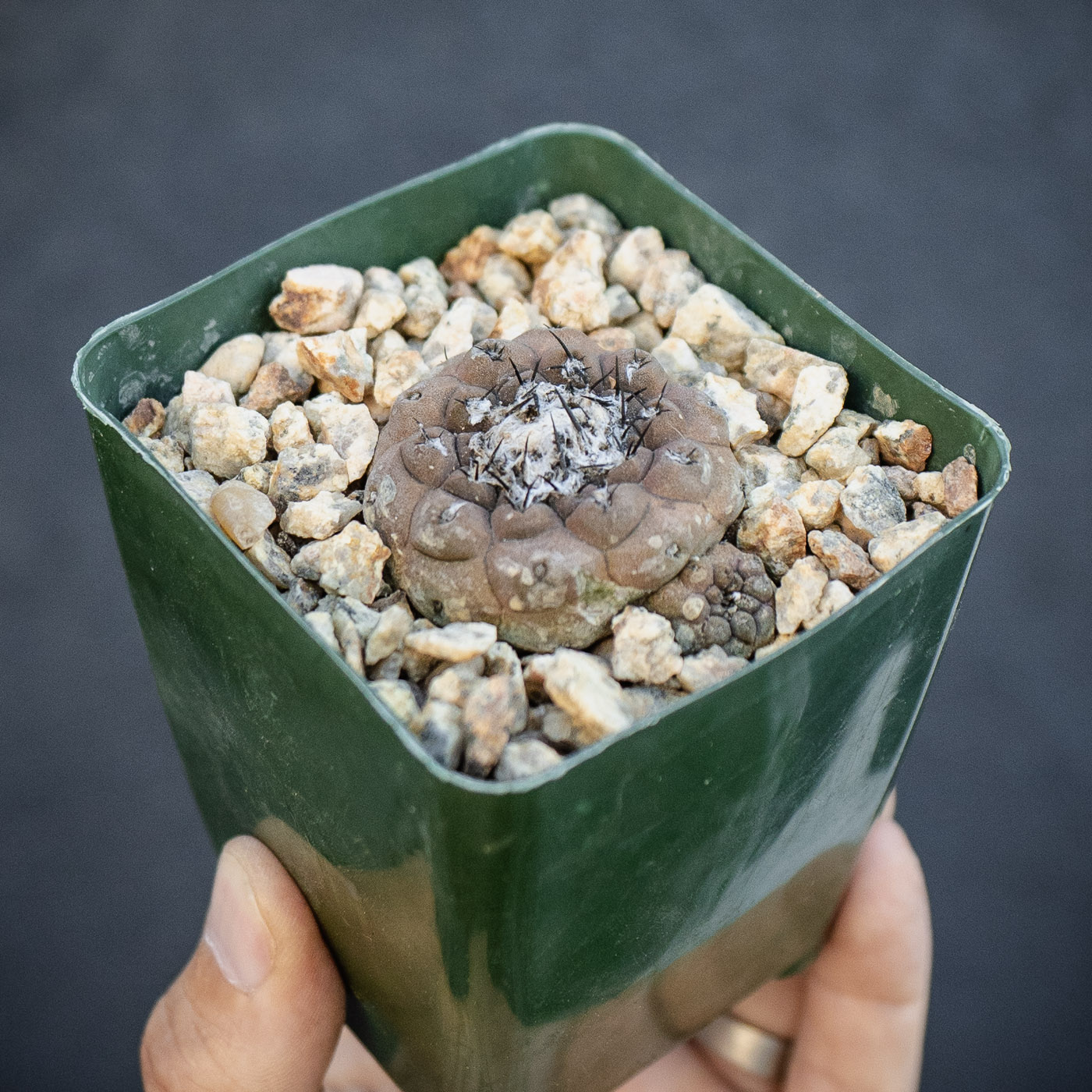
Growing in an area with virtually zero measurable annual rainfall, this species relies entirely on the heavy, daily Camanchaca fog that rolls inland from the Pacific Ocean. Its main metabolic activity, root hair development, and cellular growth occur during the cool, high-humidity months of late winter and spring. It drops into a profound, defensive dormancy during the intense dry heat of mid-summer to prevent moisture loss. In cultivation, its large taproot is exceptionally vulnerable to stagnant moisture and fungal pathogens; it requires a radically lean, strictly inorganic, mineral substrate (like an 80% to 90% pumice and crushed granite mix) and should be watered with a highly disciplined hand only during the cool shoulder seasons when night temperatures are low.
Origin
Northern Chile. This highly specialized species is native to a very narrow coastal strip north of Chañaral in the Atacama region. The specific epithet hypogaea translates to "underground," highlighting its unique growth habit. In its hyper-arid habitat, this small, geophytic cactus grows sitting completely flush with or buried just beneath the sandy gravel, silt, and clay plains. It features a bronze, grey-brown, or nearly blackish lizard-skin epidermis with a flattened, highly recessed apex and a massive, fleshy taproot that acts as an underground water reservoir. During severe droughts, the entire stem dehydrates and contracts, pulling itself deeper into the ground to hide from the searing sun and wind.
Note: Coordinates indicate a general region for educational purposes and are not exact locations. Please do not use them for collection or poaching.