2026/06/29
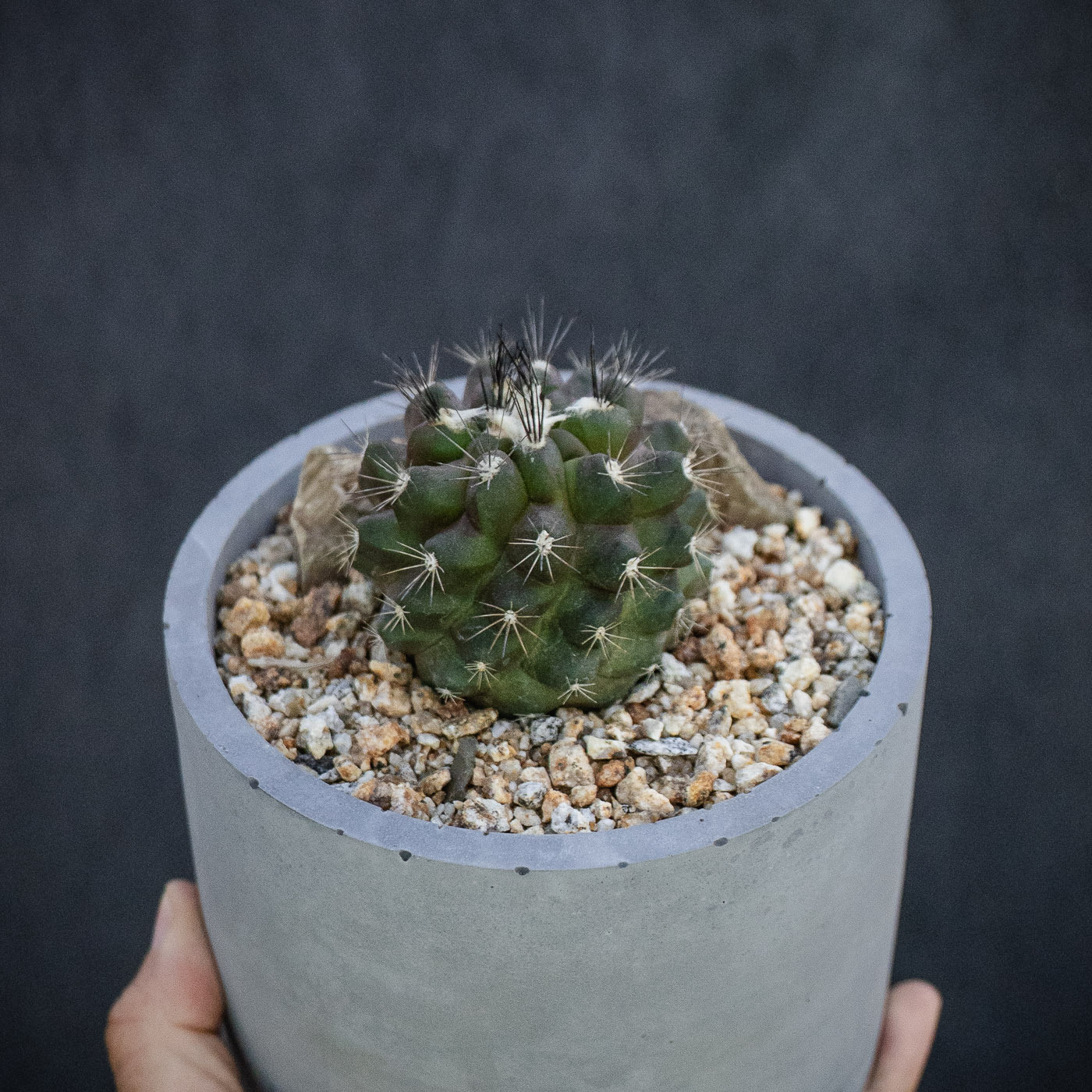
Copiapoa humilis var. paposoensis
Acquired3 months ago6/28/2026
PotterPrickly Point
Notes
Like other specialized Atacama geophytes, this variety is entirely dependent on the morning camanchaca fog banks for its survival. It features a massive, woody, taproot system below a narrow, constricted neck, allowing it to store vital water reserves deep underground. The plant experiences its primary vegetative growth and fine root exploration during the cool, buoyant months of autumn and spring, dropping into a protective metabolic standstill during the intense heat of mid-summer. In spring and early summer, bright, satiny, sulphur-yellow flowers emerge from the woolly crown at the apex, providing a stark contrast to the dark, moody tones of the stem body. In cultivation, it demands an exceptionally lean, 90% to 95% purely mineral substrate (premium volcanic pumice, coarse sand, and decomposed granite with zero uncomposted organics) to prevent taproot rot, along with highly disciplined watering restricted strictly to warm, breezy weather.
Origin
Chile. This highly localized variety is native to the exceptionally harsh, arid coast of the Antofagasta Region, specifically centered around the steep mountain foothills and gravelly marine terraces surrounding Paposo, north of Taltal. Growing at low elevations where rainfall is virtually non-existent, it survives tucked directly into granitic grit, loose shale, and rocky canyon mouths facing the ocean. Copiapoa humilis var. paposoensis is highly distinct for its dwarf geophytic nature and intensely dark morphology. It produces small, globose to short-cylindrical stems (typically 3 to 6 cm in diameter) that readily clump from the base with age. The epidermis is a striking, matte dark olive-green to deep purplish-brown or near-black color, which intensifies significantly under strong solar radiation. Its ribs are deeply broken up into prominent, chin-like tubercles topped with woolly areoles that bear short, slender, needle-like spines that emerge dark brown or black before weathering to a pale ash-grey.
Note: Coordinates indicate a general region for educational purposes and are not exact locations. Please do not use them for collection or poaching.