2026/05/04
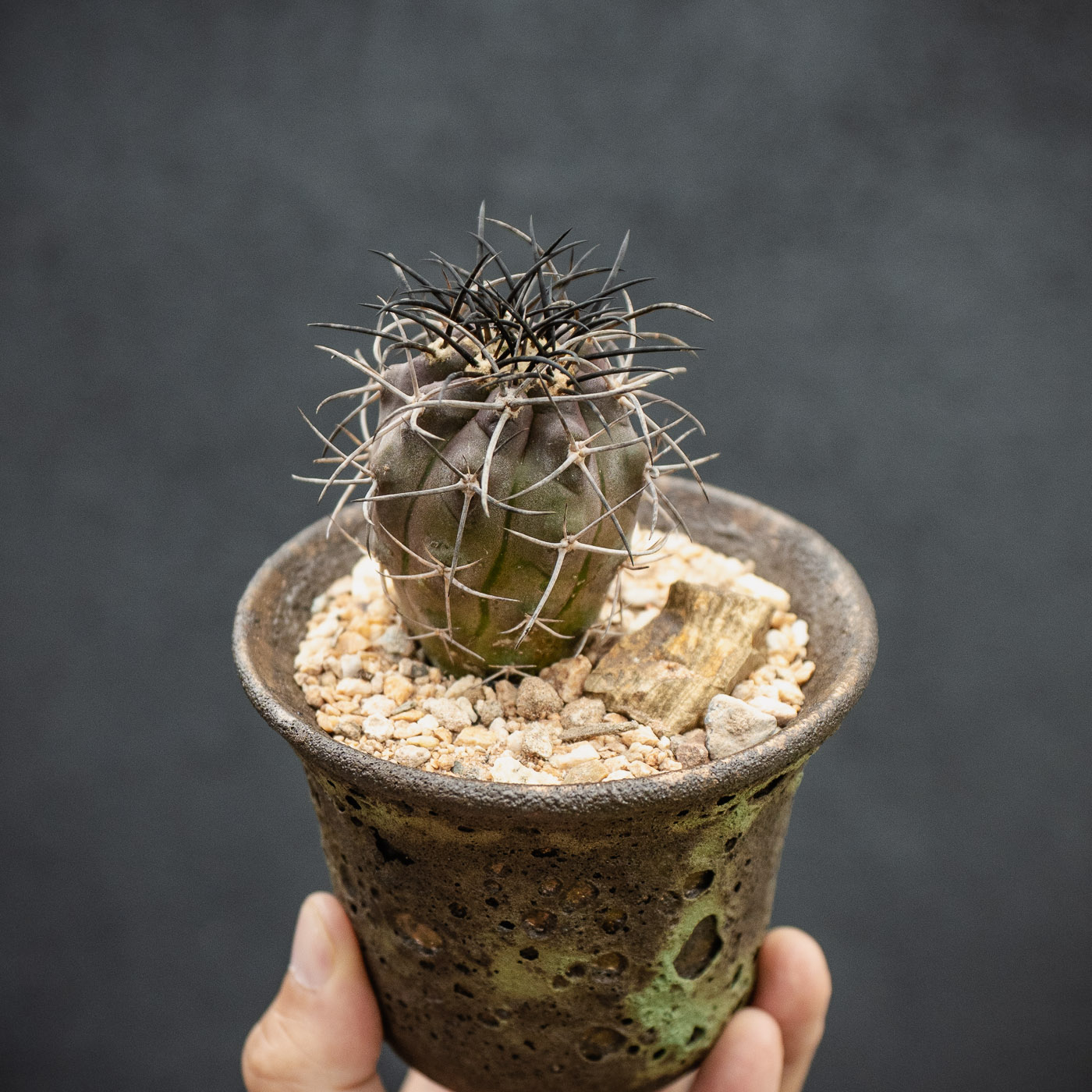
Copiapoa griseoviolacea
Acquired5 months ago5/2/2026
PotterDoctor Prickly
Notes
Like its relatives in the cinerea complex, this species relies heavily on coastal fog for moisture. Its primary growth occurs during the cooler, high-humidity months of late winter and spring. It enters a defensive dormancy during the peak of the hot, dry summer. Because it is adapted to an incredibly lean, mineral environment, it is extremely prone to root rot if over-watered or kept in organic-heavy soil. In cultivation, it thrives in a very gritty, inorganic mix and prefers deep, infrequent "fog-mimicking" waterings rather than sustained soil saturation.
Origin
Northern Chile. It is restricted to a very narrow, localized range in the Atacama Desert, specifically on the coastal hills south of Huasco in the Atacama Region. It grows on gentle, rocky slopes and gravelly plains (llanos), often partially buried in the substrate. The name refers to the distinctive grey-violet or leaden hue the epidermis takes on when exposed to high light and mineral-rich soils.
Note: Coordinates indicate a general region for educational purposes and are not exact locations. Please do not use them for collection or poaching.