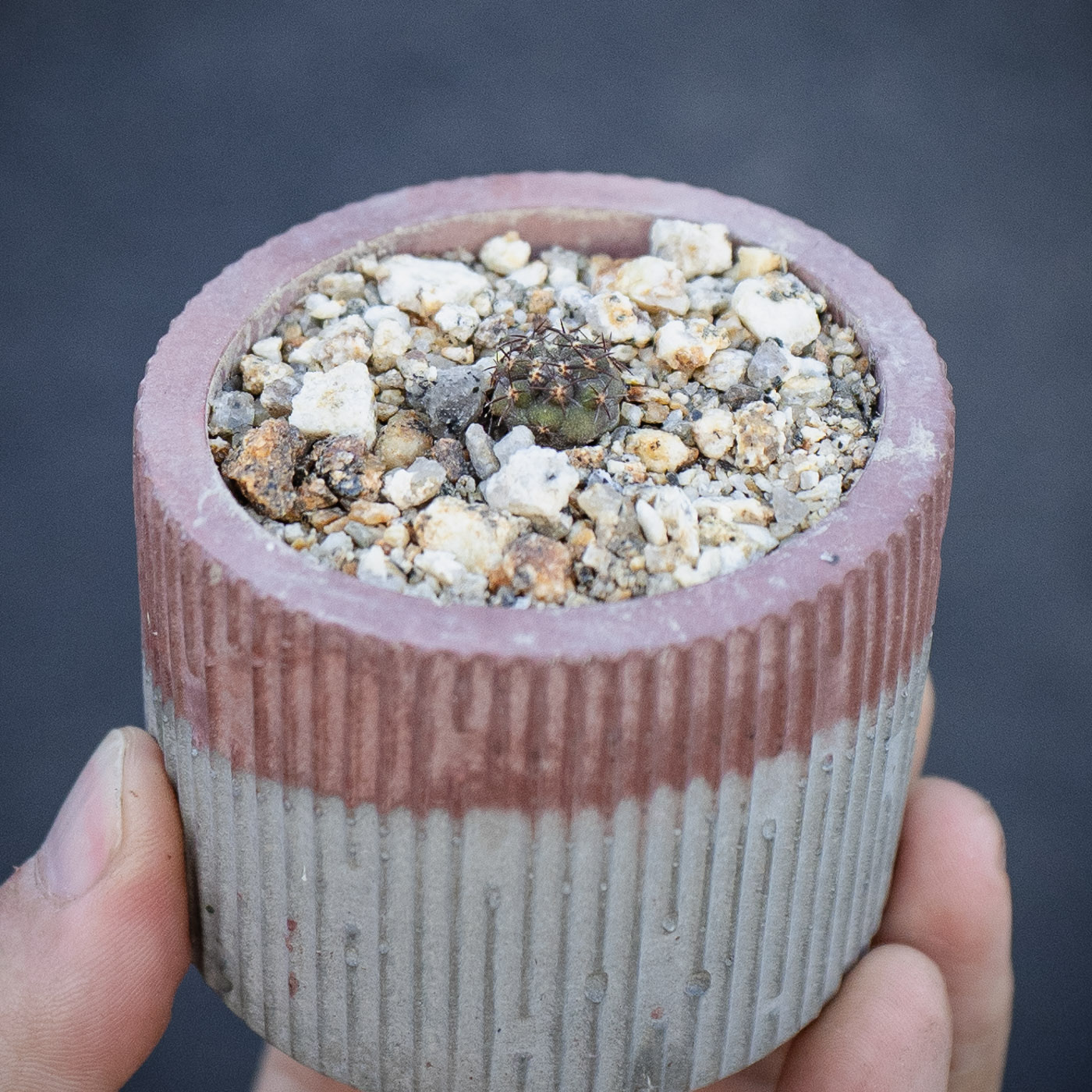
Copiapoa goldii
Field Data
PV 2172Field NumberPV 2172
Notes
Evolving in a hyper-arid coastal pocket where rainfall is practically non-existent, this dwarf species survives by capturing moisture from the dense camanchaca fog rolling off the Pacific. Because of its large, water-storing tuberous taproot, it is exceptionally sensitive to overwatering and root rot if exposed to lingering moisture or organic soils. In a coastal Zone 10b environment, maintaining strict mineral aridity and maximum UV sun exposure is vital to preserve its deep bronze body color and prevent bloating. It demands a hyper-porous, inorganic mineral substrate, making your 80% premium pumice blend cut with coarse decomposed granite and calcined clay ideal to mimic its native granitic and gravelly scree. Cultivating this specimen in a deep, highly breathable raw cement pot provides necessary room for the large taproot while rapidly wicking away residual moisture around the root collar. Water must be applied with extreme restraint only during warm summer stretches—allowing the substrate to dry out completely between soakings—and strictly withheld throughout a bone-dry winter dormancy beneath a solid polycarbonate roof to protect against cold seasonal rains.
Origin
Chile. This distinct field collection by Petr Pavelka (PV 2172) originates from the hyper-arid, fog-swept coastal hills and dry gravel terraces of the Atacama Desert, specifically in the coastal region north of Huasco and Carrizal Bajo in the Atacama Region. In its native habitat, it grows nestled tightly into cracks of sun-baked rocks and mineral scree at low elevations. It forms small, solitary to sparingly clumping globose to shortly cylindrical stems with a smooth, dark chocolate-brown to bronze or olive-green epidermis. The ribs are divided into low, rounded tubercles, and the areoles bear short, delicate, dark or blackish-brown spines that often lie flat against the stem. Deep beneath the surface, it anchors via a massive, fleshy taproot. During summer, it produces delicate, satiny yellow flowers from the dense wool at its apex.
Note: Coordinates indicate a general region for educational purposes and are not exact locations. Please do not use them for collection or poaching.