2026/05/18
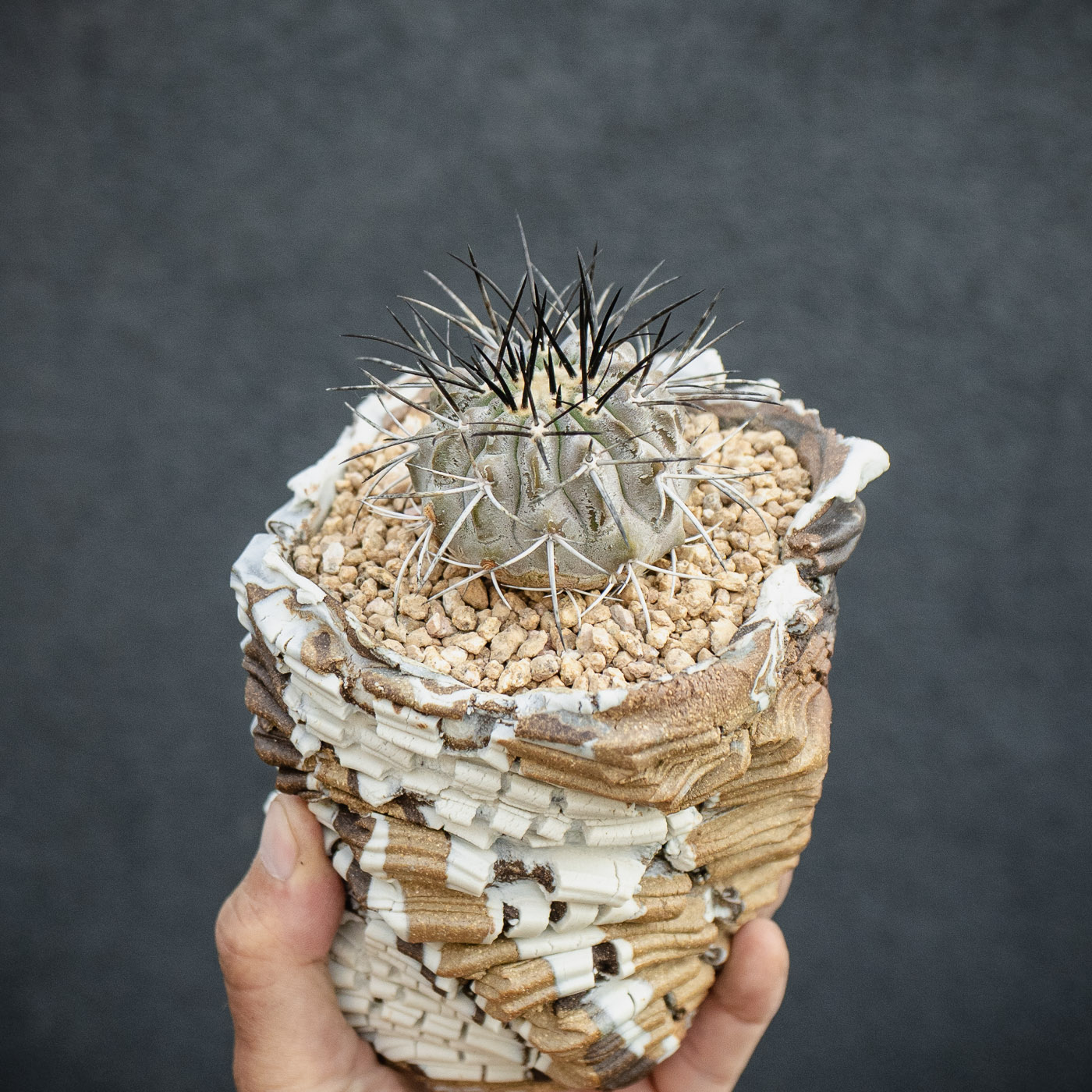
Copiapoa dealbata
Acquired4 months ago5/16/2026
PotterSuccy Ceramics
Notes
This form relies strictly on the cool, moisture-laden Camanchaca fog that funnels into the coastal ravine to sustain itself in a near-rainless environment. Its primary vegetative growth and core metabolic activity occur during the highly humid months of late winter and spring when condensation on the heavy spines is maximized. It shuts down entirely into a deep dormancy to conserve moisture during the scorching summer heat. In cultivation, it is highly susceptible to root rot; it demands a completely inorganic, mineral-heavy substrate (like an 80% pumice and crushed granite mix) and must be watered with an incredibly light hand, strictly limiting moisture to the cool shoulder seasons when night temperatures drop.
Origin
Northern Chile. This distinct geographic form is found within the hyper-arid coastal ravines of Quebrada Mala, a desert wash cutting through the hills between Huasco and Carrizal Bajo in the Atacama region. The terrain is exceptionally desolate, characterized by rocky alluvial gravel and limestone-streaked outcrops. Plants here frequently present the classic carrizalensis phenotype, slowly building massive, dense mounds of heavily clustering heads shielded by a brilliant white, chalky waxy epidermis and fiercely stiff, dark spines.
Note: Coordinates indicate a general region for educational purposes and are not exact locations. Please do not use them for collection or poaching.