2026/06/29
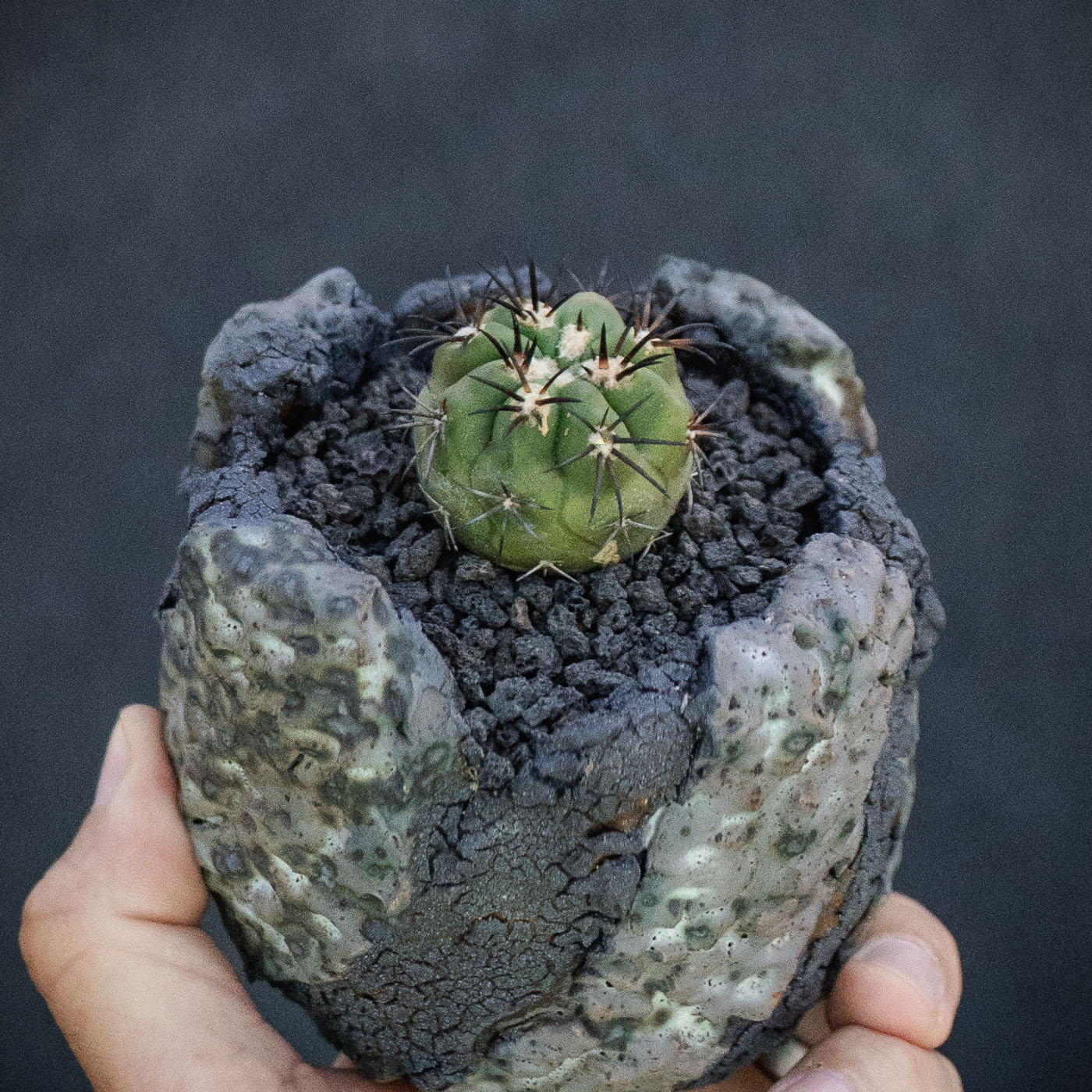
Copiapoa dealbata var. carrizalensis
Acquired3 months ago6/28/2026
PotterGV Succulents
Notes
Endemic to one of the driest coastal deserts on Earth, this cactus is an evolutionary specialist that sustains itself almost exclusively via the dense camanchaca fog. The thick, woolly crown at the stem apex acts as a moisture trap, capturing water droplets from the cool morning fog banks rolling off the cold Pacific, which then drip down to a substantial, wide-spreading root network. The plant triggers its primary, highly incremental growth and root expansion during the cooler autumn and spring shoulder seasons, completely shutting down its metabolic processes during the high-heat intensity of mid-summer to conserve its internal hydration. In late summer, it pushes bright, satiny, sulphur-yellow flowers directly from the woolly apical center. In cultivation, it demands an uncompromisingly sharp-draining, 90% to 95% purely mineral potting substrate composed of premium volcanic pumice, coarse sand, and decomposed granite with zero organic matter, paired with an extremely restrained watering schedule strictly confined to warm, breezy weather.
Origin
Chile. This highly specialized, majestic cactus is native to a very narrow coastal strip in the Atacama Desert's Huasco Province, centered around the rugged coastal plains and low granitic hills of Carrizal Bajo and within the borders of Llanos de Challe National Park. Growing on low-altitude gravel terraces and arid, sandy plains just above the ocean reach, the plants form massive, spectacular multi-headed cushions that can span over a meter across. The stems are globose to short-cylindrical, heavily characterized by a thick, chalky, blue-white to ash-grey cuticular wax coating designed to shield the plant from the unrelenting equatorial sun. The carrizalensis variant is particularly distinct within the dealbata complex for its more robust, fiercely armed morphology; it features thick, deeply notched ribs lined with large areoles that erupt with long, straight, incredibly rigid spines. These spines emerge a dark, contrasting reddish-brown to almost black at the apex before weathering over time to a ghostly, mineral grey.
Note: Coordinates indicate a general region for educational purposes and are not exact locations. Please do not use them for collection or poaching.