2026/05/22
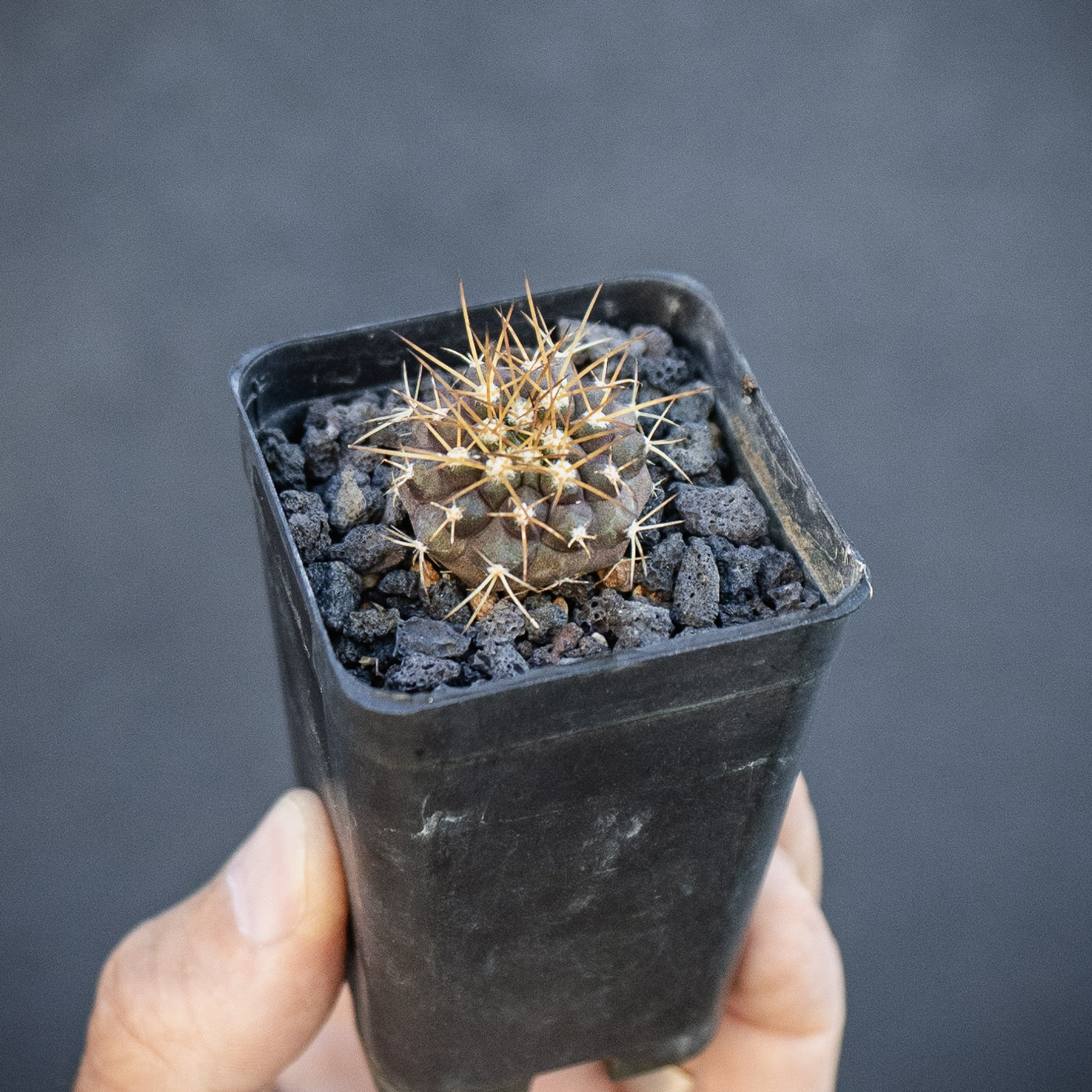
Copiapoa coquimbana
Acquired5 months ago5/3/2026
Notes
While this species experiences slightly more frequent rainfall events than the hyper-arid northern species, it remains deeply dependent on the daily Camanchaca fog rolling inland to sustain its baseline hydration. Its main metabolic activity, root development, and vegetative growth occur during the cool, high-humidity window of late winter and spring. It drops into a highly defensive, protective dormancy to survive the intense, dry summer heat. In cultivation, it requires a lean, strictly inorganic, mineral-dominant substrate (such as 80% pumice mixed with decomposed granite) and should be watered carefully, focusing moisture on the cool shoulder seasons when nights are consistently crisp.
Origin
Northern Chile. This species has one of the southernmost distributions of the genus, running along the coastal regions of the Coquimbo and southern Atacama provinces (from north of Huasco down to south of La Serena). It populates low, rocky marine terraces, gravelly hillsides, and sandy coastal plains. Because it pushes further south into slightly less arid zones than its northern cousins, it forms highly robust, expansive, dense cushions containing dozens of individual globose-to-cylindrical heads. The epidermis ranges from a rich olive-green to dull grey-green, heavily armed with stiff, curved, dark brown to blackish spines that gradually weather to an ash-grey with age.
Note: Coordinates indicate a general region for educational purposes and are not exact locations. Please do not use them for collection or poaching.