2026/07/28
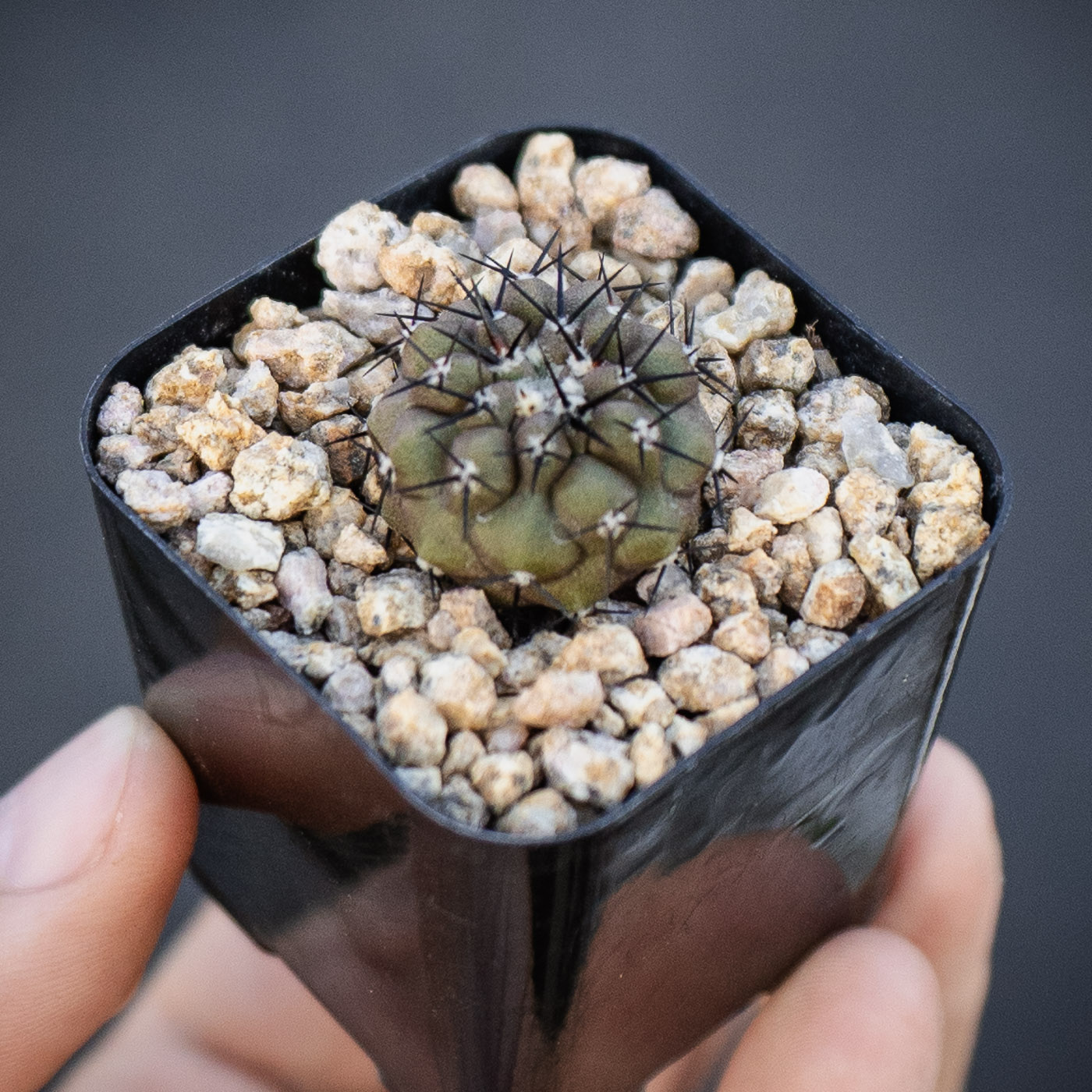
Copiapoa cinerea var. minicarpa
Sowing11 months ago11/1/2025
Acquired4 months ago5/20/2026
Field Data
Field NumberKK 1734
Recorded ByKarel Kníže
LocalityTaltal, Chile
Elevation300m
Field data provided by rarecactus.com
Notes
Growing in habitat conditions where measurable rain can be absent for years, this low-altitude variant relies completely on the daily marine Camanchaca fog that rolls off the Pacific and funnels into the coastal hills. Its main metabolic activity and growth occur during the cool, high-humidity months of late winter and spring when fog condensation on the heavy spines is at its peak. It drops into a deep, defensive dormancy to prevent desiccation during the intense dry heat of mid-summer. In cultivation, it is highly susceptible to root rot; it requires a lean, strictly mineral-dominant substrate (like a mix of 80% pumice and crushed granite) and must be watered with an exceptionally light hand, focusing moisture exclusively on the cool shoulder seasons.
Origin
Northern Chile. This specific clonotype form, originally collected and distributed under the field number KK 1734 by Karel Kníže, is native to the hyper-arid coastal hills near the port city of Taltal in the Antofagasta region. Found at a low altitude of approximately 300 meters, it clings to highly exposed rocky terraces and gravelly ocean benches. While architecturally identical to the classic C. cinerea phenotype—boasting a slow-growing, solitary or cluster-forming stem shrouded in a chalky, ash-white waxy bloom and armed with rigid jet-black spines—this particular variety is traditionally distinguished by its significantly smaller fruit profile ("minicarpa").
Note: Coordinates indicate a general region for educational purposes and are not exact locations. Please do not use them for collection or poaching.