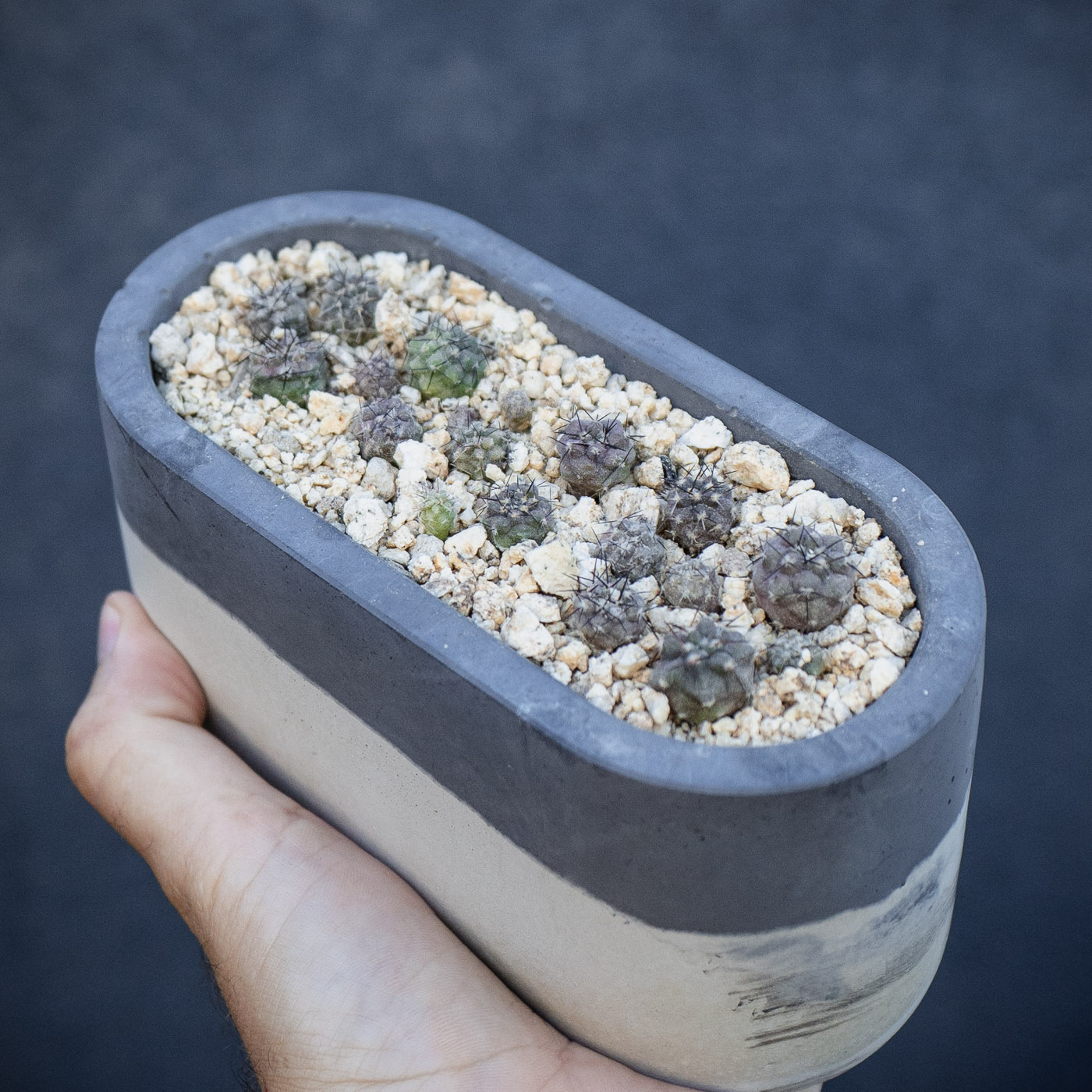
Copiapoa cinerea
Field Data
ZJ 143Field NumberZJ 143
Recorded ByZlatko Janeba
LocalityTaltal, Chile
Event Date1996
Field data provided by rarecactus.com
Notes
Evolving in the severe coastal extreme of the Atacama Desert where measurable rainfall is almost non-existent, this species survives by capturing atmospheric moisture from the camanchaca sea fogs. In a coastal Zone 10b environment, maintaining strict mineral aridity and maximum UV sun exposure is essential to preserve its signature chalky-white epicuticular wax; excess organic material or stagnant moisture will cause the plant to bloat, turn green, and succumb to root rot. It demands an exceptionally porous, fast-draining substrate, making an 80% premium pumice blend cut with coarse decomposed granite and calcined clay ideal to mimic the sterile granitic scree of Taltal. Cultivating this slow-growing specimen in a hand-crafted, highly breathable raw cement pot provides vital root stability while wicking away residual moisture around the base. Water must be applied with extreme restraint only during warm summer stretches, allowing the pot to dry out completely between soakings, and strictly withheld throughout a cold, bone-dry winter rest beneath a solid polycarbonate roof to shield against seasonal rains.
Origin
Chile. This notable field collection by Zlatko Janeba (ZJ 143) originates from the hyper-arid coastal region located approximately 10 kilometers southeast of Taltal in the Antofagasta Region. Thriving on sun-scorched, granitic hillsides and dry rocky terraces, this locality form is renowned for its classic, highly refined cinerea morphology. It develops a solitary, slow-growing globose to cylindrical stem coated in a thick, chalky greyish-white epicuticular wax that reflects severe solar radiation. The ribs are prominent and broad, adorned with neat woolly areoles and armed with short, rigid, jet-black spines that create a dramatic visual contrast against the pale epidermis. In late summer, it pushes satiny pale yellow flowers directly from the dense cushion of apical wool at its crown.
Note: Coordinates indicate a general region for educational purposes and are not exact locations. Please do not use them for collection or poaching.