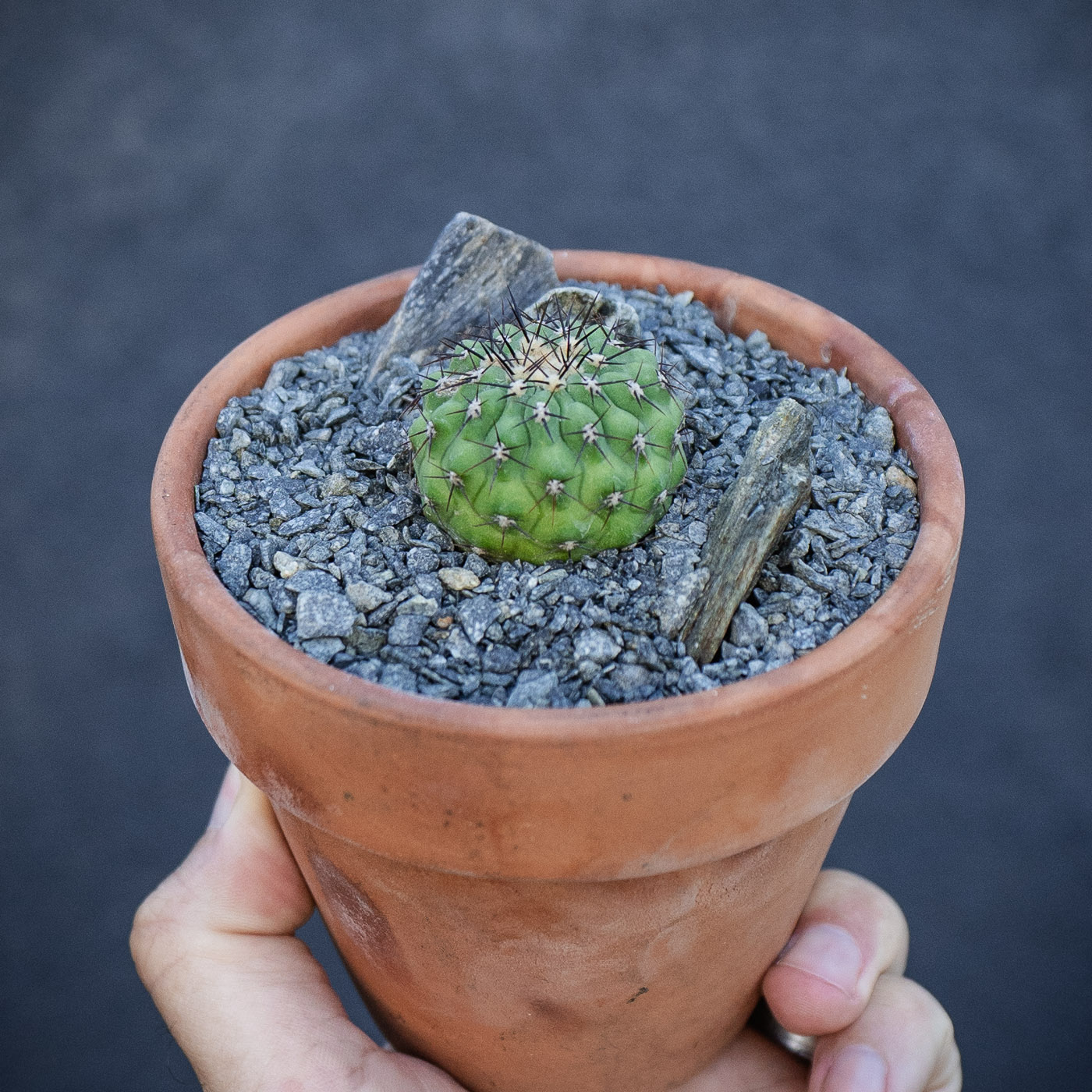
Copiapoa cinerea subs. columna-alba
Acquired16 days ago10/2/2026
Field Data
JN 2511Field NumberJN 2511
Recorded ByJan Novák
LocalityCaleta La Madera, Chile
Field data provided by rarecactus.com
Notes
Adapted to one of the driest coastal plains on Earth, this subspecies relies almost exclusively on the dense camanchaca fog rolling off the Pacific. In a coastal Zone 10b environment, maintaining its brilliant porcelain-white wax demands maximum UV sunlight exposure, exceptional airflow, and a strictly controlled moisture regime; excess humidity or organic soils will cause the plant to green out and rot. It requires an uncompromisingly gritty, inorganic mineral substrate, making your 80% premium pumice blend cut with coarse decomposed granite and calcined clay ideal. Cultivating this slow-growing, solitary column in a deep, breathable raw cement pot provides vital root stability while wicking away residual moisture around the base. Water must be applied with extreme restraint only during warm summer stretches, allowing the pot to dry out completely between soakings, and strictly withheld throughout a cold, bone-dry winter rest beneath a solid polycarbonate roof to shield against seasonal rains.
Origin
Chile. This specific field collection by Jan Novák (JN 2511) originates from the hyper-arid coastal terraces of Pan de Azúcar National Park, located north of Chañaral in the Atacama Desert. In its stark native habitat, this subspecies forms tall, strictly solitary columns that lean noticeably toward the equator (northward) to optimize solar exposure and shade their bases. It is celebrated for its brilliant, high-contrast aesthetics: an intensely chalky, porcelain-white epidermis coated in thick epicuticular wax, starkly set against short, rigid, jet-black spines that cluster tightly along the ribs. The apical crown produces a thick cushion of yellow-orange wool, from which small, satiny pale yellow flowers emerge in late summer.
Note: Coordinates indicate a general region for educational purposes and are not exact locations. Please do not use them for collection or poaching.