2026/05/04
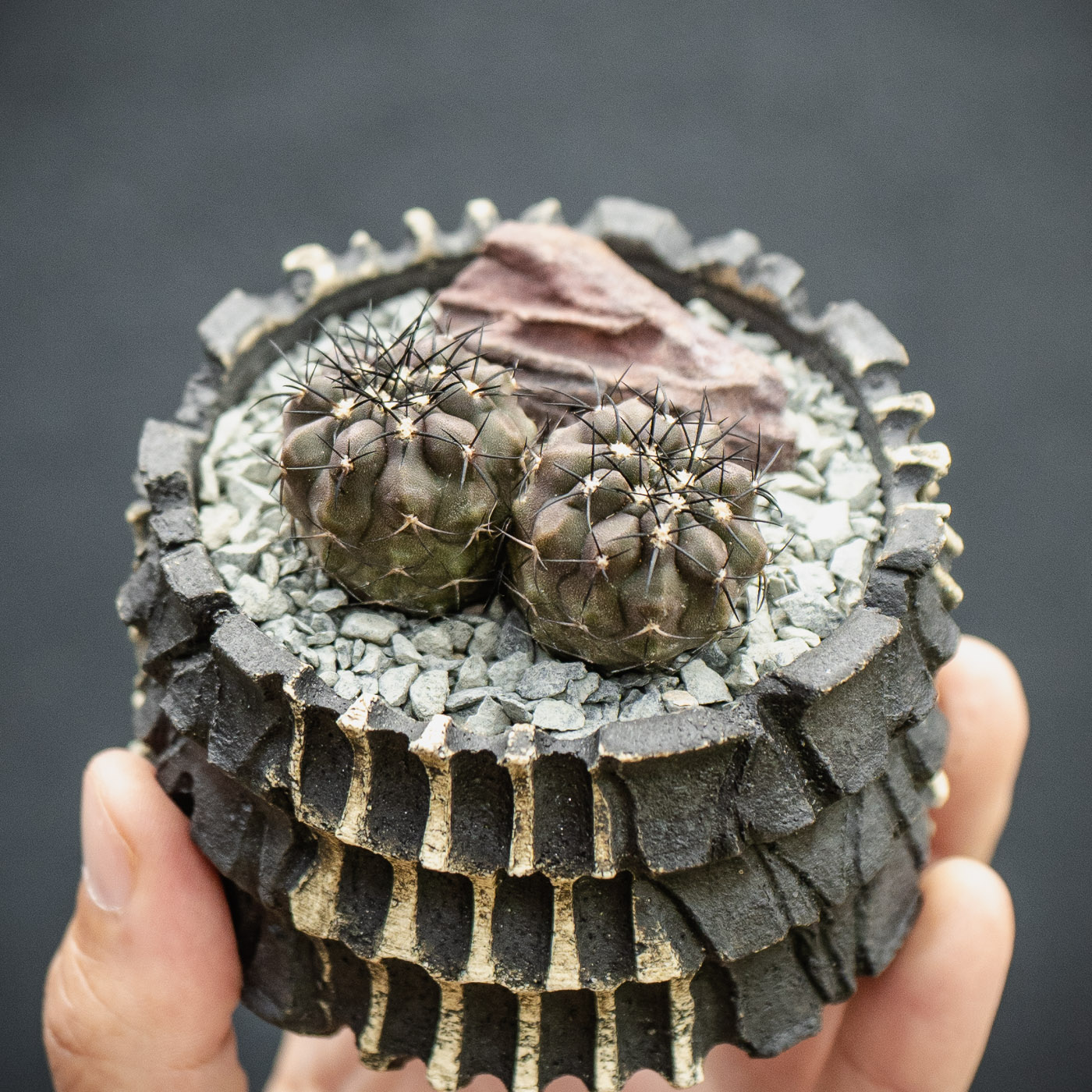
Copiapoa cinerea
Acquired5 months ago5/2/2026
PotterDeath Caxtus
Notes
Dichotomous
While it can be opportunistic, its primary metabolic activity is triggered by the cooler, foggy months of winter and early spring. In its native habitat, it rarely sees actual rainfall, absorbing moisture through its epidermis and spines from the morning mist. In cultivation, it enters a semi-dormancy during the high heat of summer to prevent desiccation and should be kept mostly dry during this time. It is highly sensitive to overwatering; a high-mineral substrate (such as 80% pumice and 20% organic matter) is essential to mimic its native granite scree and protect its thick, carrot-like taproot from rot.
Origin
Northern Chile. It is endemic to the extremely arid coastal cliffs and hills of the Atacama Desert, specifically in the Antofagasta region near Taltal and Paposo. This species survives in one of the driest places on Earth, relying almost entirely on "Camanchaca" (coastal fog) that rolls in from the Pacific. It grows in steep, rocky canyons and on decomposed granite slopes, often developing a stark white waxy bloom to reflect intense UV radiation.
Note: Coordinates indicate a general region for educational purposes and are not exact locations. Please do not use them for collection or poaching.