2026/06/29
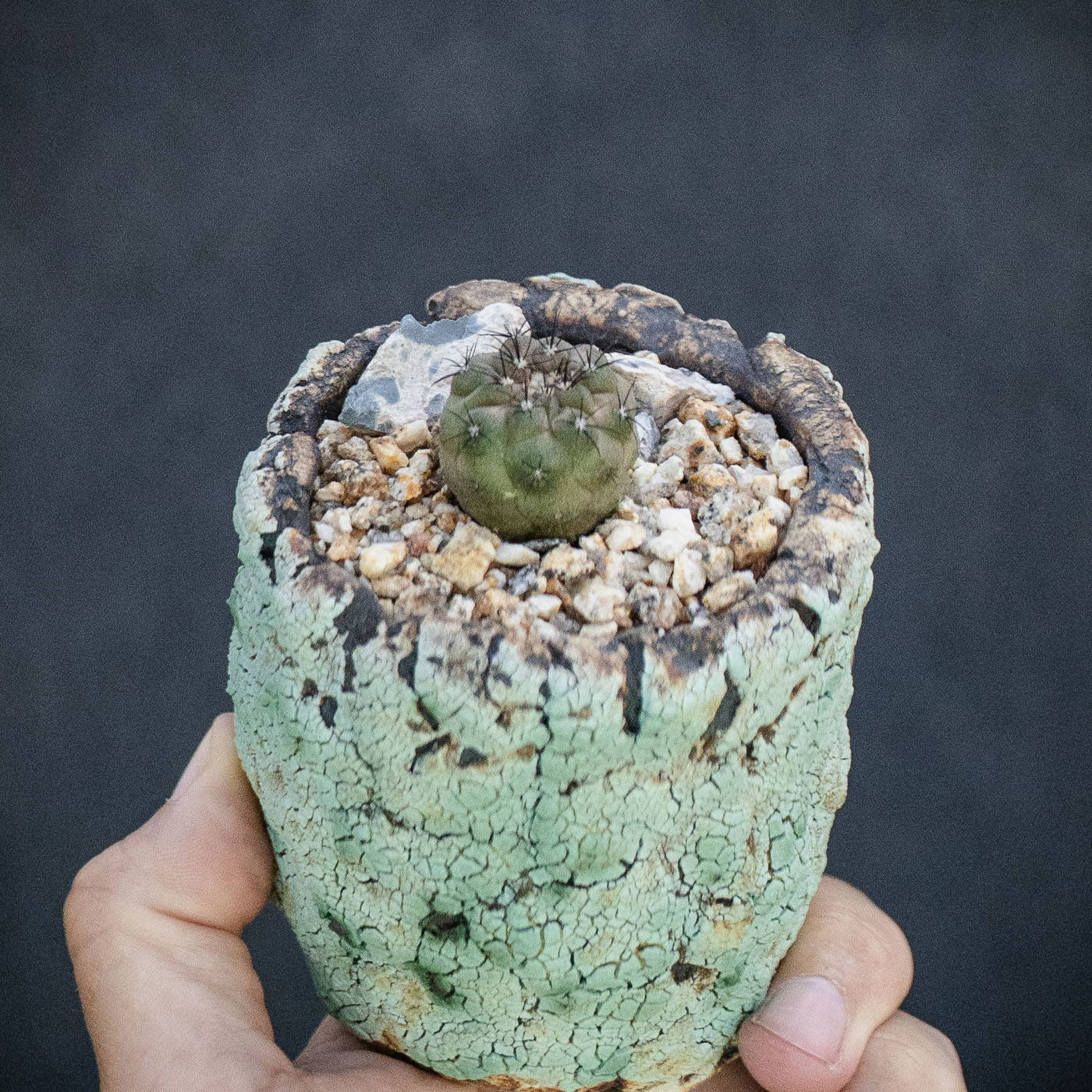
Copiapoa calderana subs. atacamensis
Acquired3 months ago6/28/2026
PotterGV Succulents
Notes
As a classic fog-dependent specialist of the Chilean coastal desert, this species relies almost entirely on the dense morning camanchaca fog rolling off the cold Humboldt Current to survive. The apex of the plant is packed with dense, yellowish-grey wool that acts as a moisture trap, condensing water droplets from the air to drip down into a massive, thick taproot system optimized for water storage. The cactus drives its primary, highly incremental growth and root activity during the cool, humid months of autumn and spring, dropping into a deep, defensive metabolic dormancy during the intense heat of mid-summer to prevent internal moisture loss. In late summer, it pushes satiny, funnel-shaped, bright yellow flowers directly out of the heavily felted crown wool. In cultivation, it demands an uncompromisingly sharp-draining, 90% to 95% purely mineral potting substrate (such as premium volcanic pumice, coarse sand, and decomposed granite with zero uncomposted organics) and must be watered with extreme restraint only during warm, breezy weather.
Origin
Chile. This legendary, deeply resilient cactus is native to a highly localized coastal strip within the hyper-arid Atacama Desert, primarily distributed along the rugged granitic hillsides and barren rocky terraces surrounding the coastal town of Paposo, south of Taltal. Thriving in an environment where virtually no annual rainfall occurs, the plants grow completely exposed on steep, sun-baked slopes and gravel benches that drop abruptly into the Pacific Ocean. Copiapoa atacamensis forms a robust, heavy morphology, starting as a solitary globose stem before slowly offsetting with age to create impressive, compact clusters. The body features a dull greyish-green to dark olive epidermis that is often accented by a chalky white cuticular wax near the apex to reflect intense solar radiation. The stems are deeply divided into 12 to 16 prominent, tuberculate ribs, which are heavily armed with a rigid, interlaced cage of thick, needle-like spines that emerge a deep chocolate-brown to jet-black before weathering over time to a ghostly, mineral-grey hue.
Note: Coordinates indicate a general region for educational purposes and are not exact locations. Please do not use them for collection or poaching.