2026/05/16
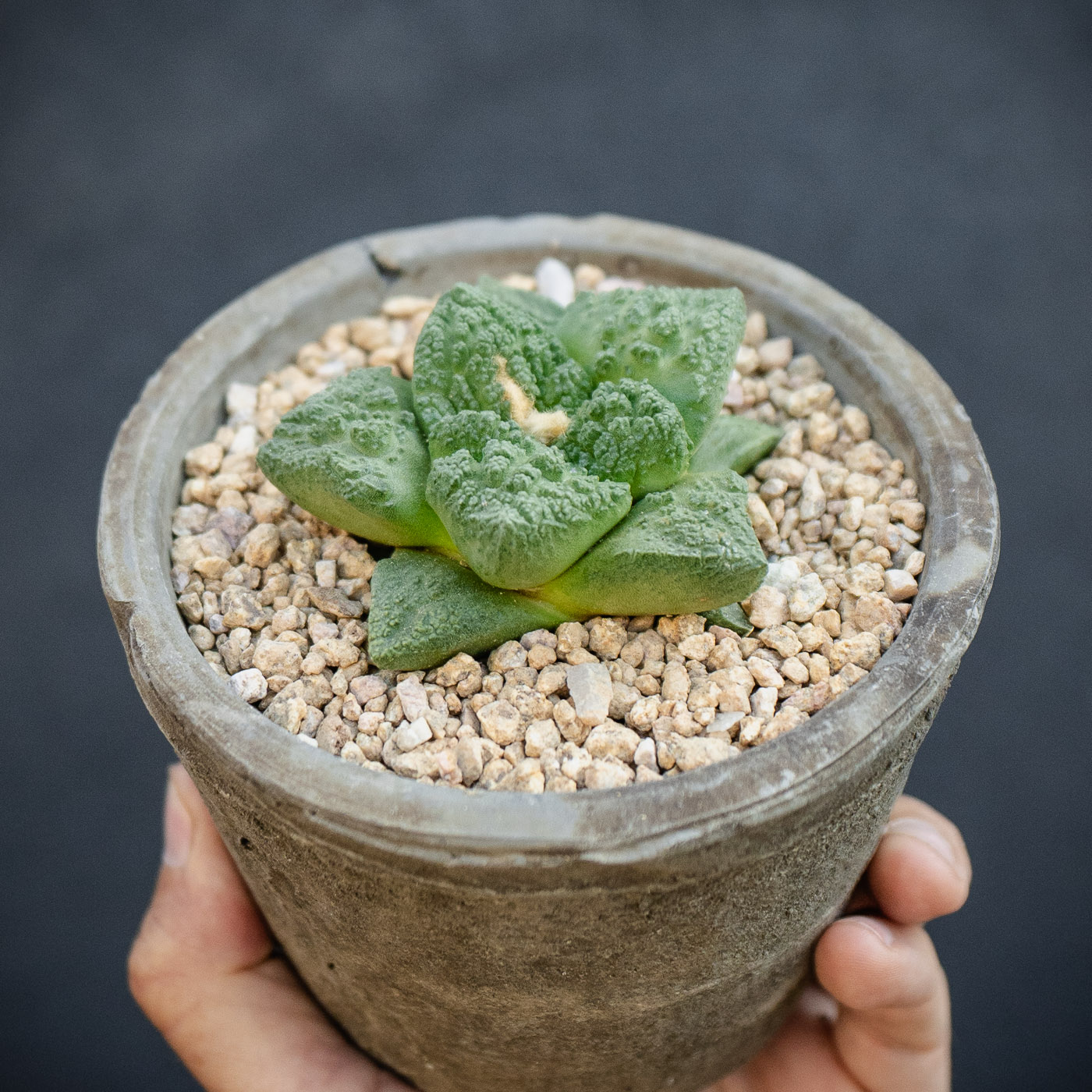
Ariocarpus fissuratus cv. Godzilla
Acquired4 months ago5/15/2026
Notes
True to its A. fissuratus lineage, "Godzilla" is an extreme slow-grower that coordinates its primary active phase and flowering with the arrival of early autumn. In September and October, large, vibrant pink-to-magenta flowers emerge directly from the woolly center of the crown, creating a stark contrast against the dark, primeval look of the tubercles. It remains completely dormant during the freezing winter and enters a protective rest period during the peak heat of early summer.
In cultivation, this cultivar is a prized jewel that demands a strict mineral-culture approach. Because it possesses a massive, turnip-like taproot that is highly vulnerable to rot, an exceptionally porous, inorganic substrate is non-negotiable—a mix of 80% pumice and 20% organic matter is ideal for ensuring water passes through instantly. It should be grown in deep clay or heavy plastic pots to accommodate the taproot and allowed to dry completely between waterings. To maintain its highly compact, ultra-wrinkled "Godzilla" phenotype and prevent the plant from bloating or stretching, it requires intense, bright light with good airflow. Watering should be tapered off entirely after the autumn bloom, keeping the plant completely dry through the winter months.
Origin
This highly coveted cultivar is a mutation of Ariocarpus fissuratus, a species native to the harsh Chihuahuan Desert, spanning northern Mexico (Coahuila, Chihuahua, Durango) and the Big Bend region of western Texas. In the wild, the parent species grows flush with the ground on limestone hills, rocky chips, and flat chips of sun-baked shale. The "Godzilla" cultivar, originally selected in Japan, is a extreme "monstrose" form characterized by heavily wrinkled, rough, and deeply fissured tubercular surfaces that resemble the textured hide of a reptile, a dramatic amplification of the wild species' already rugged appearance.
Note: Coordinates indicate a general region for educational purposes and are not exact locations. Please do not use them for collection or poaching.