2026/05/14
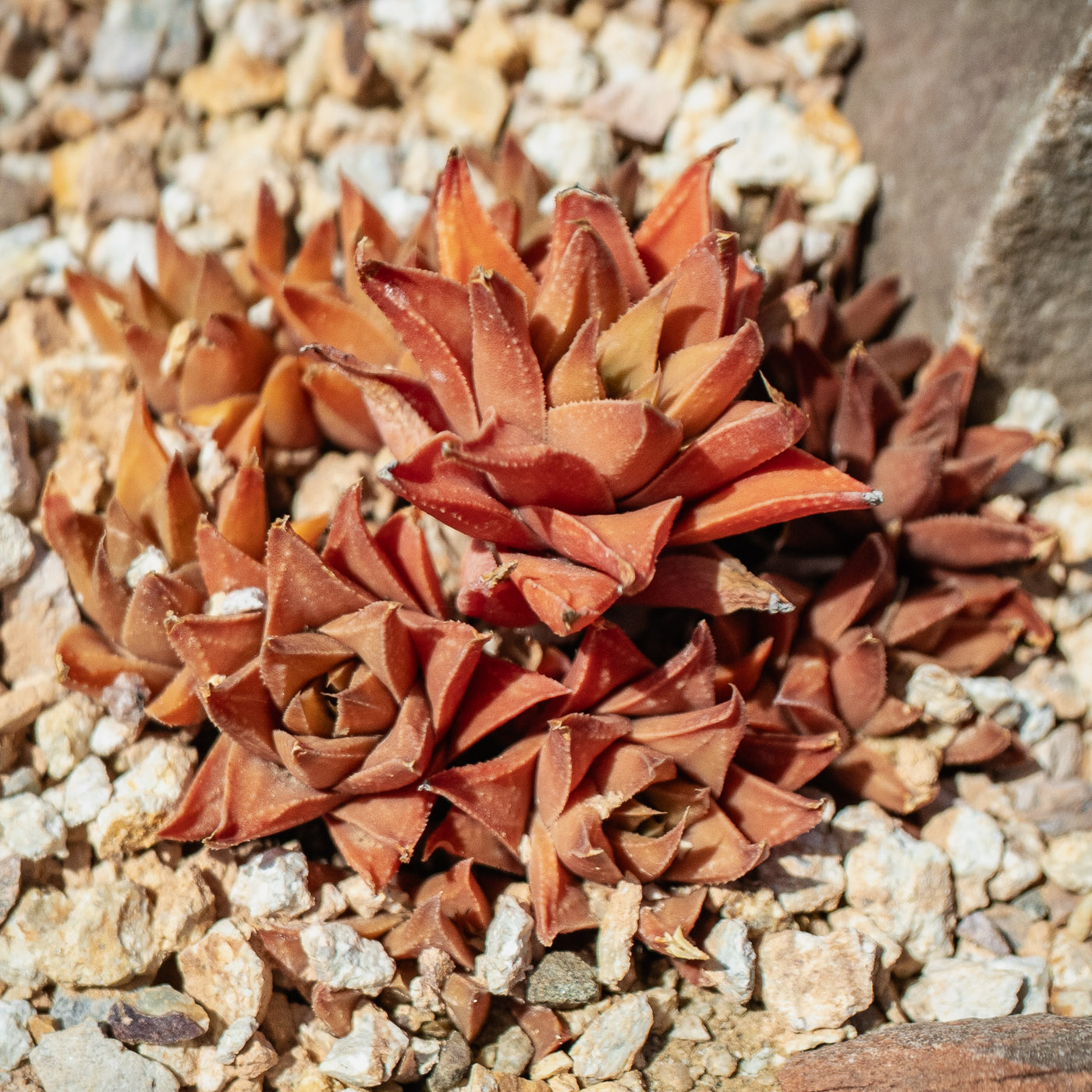
Alworthia speciosa x cymbiformis cv. Black Gem
Acquired5 months ago4/25/2026
Notes
Following the patterns of the Eastern Cape, this hybrid is most active during the moderate temperatures of the spring and autumn. It is a highly opportunistic grower and will readily produce offsets to form dense mounds if conditions are favorable. While it is tolerant of a wide range of conditions, it tends to slow down during the peak of summer heat and mid-winter cold. The dark "black" coloration is a direct response to UV exposure and cooler temperatures; in shaded or overly pampered conditions, the plant will revert to a lush green.
In cultivation, this hybrid is exceptionally resilient and more forgiving than many pure-bred Haworthias. It thrives in a high-mineral substrate—ideally a mix of 80% pumice and 20% organic matter—which supports its thick, fleshy root system and prevents the base of the rosette from rotting. While it can handle lower light than many desert cacti, its hallmark dark coloration requires very bright, indirect light or filtered sun. It should be watered thoroughly when the soil is dry to the touch during its active phases, then kept on the drier side during the winter to mimic the natural precipitation cycles of the South African thicket.
Origin
This is likely a bigeneric hybrid between Aloe speciosa x Haworthia cymbiformis
This is an intergeneric hybrid between Aloe speciosa and Haworthia cymbiformis, both of which are native to South Africa. Aloe speciosa (the Tilt-head Aloe) originates from the dry, scrubby hillsides of the Eastern Cape, while Haworthia cymbiformis is found in the same province, typically growing in large clusters on rocky cliffs along the banks of the Fish River. The "Black Gem" cultivar was selected for its striking ability to transition from a deep forest green to a dark, near-black bronze when exposed to bright light or drought stress. It combines the robust, clumping nature of its Haworthia parent with the more elongated, succulent leaf structure of the Aloe.
Note: Coordinates indicate a general region for educational purposes and are not exact locations. Please do not use them for collection or poaching.