2026/05/14
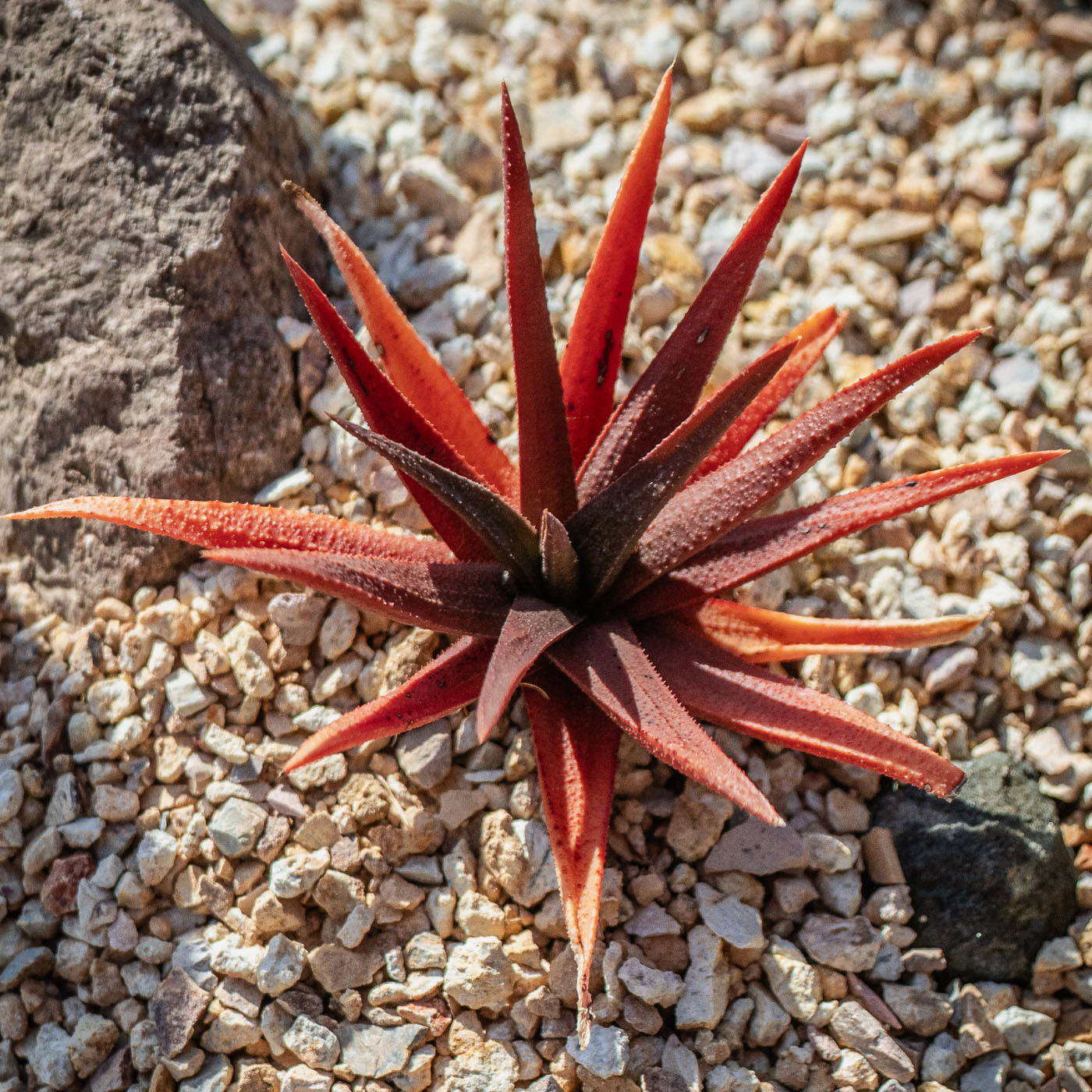
Aloe rauhii x parvula cv. Black Beauty
Acquired5 months ago4/25/2026
Notes
As a Malagasy hybrid, this Aloe favors the moderate temperatures of the shoulder seasons. It is most active during the spring and autumn, producing its darkest coloration when exposed to bright light and cool night temperatures. While it can grow throughout the summer if moisture is available, it may "bronze" or stall during periods of extreme heat. Its flowering cycle typically occurs in late winter or early spring, sending up thin inflorescences with coral-to-orange tubular flowers.
In cultivation, this hybrid is particularly prized for its tactile, bumpy texture and its ability to turn almost completely black under high UV stress. It thrives in a very lean, mineral-heavy substrate—such as the 80% pumice and 20% organic ratio—which prevents the "soft" or bloated growth that occurs in richer soils. Because of its A. parvula parentage, it appreciates slightly more frequent watering than a desert cactus during its active growth phases, but it remains highly susceptible to crown rot if water lingers in the leaf axils. To maintain its compact, "Black Beauty" form, it should be grown in very bright, direct light, with watering significantly reduced during the winter months to respect its natural rest period.
Origin
This plant is a cultivated hybrid derived from two species native to the island of Madagascar. Aloe rauhii originates from the arid, sandstone plateaus of the Toliara province in the southwest, while Aloe parvula is found in the central highlands, often growing in rocky, montane environments. The "Black Beauty" cultivar was selected for its intensely dark, purplish-black foliage and its rows of prominent, tooth-like tubercles. In a habitat-mimicking setting, these parent species are accustomed to growing in shallow, mineral-rich soils tucked into rocky crevices or under the light filtered shade of sparse scrubland.
Note: Coordinates indicate a general region for educational purposes and are not exact locations. Please do not use them for collection or poaching.