2026/05/14
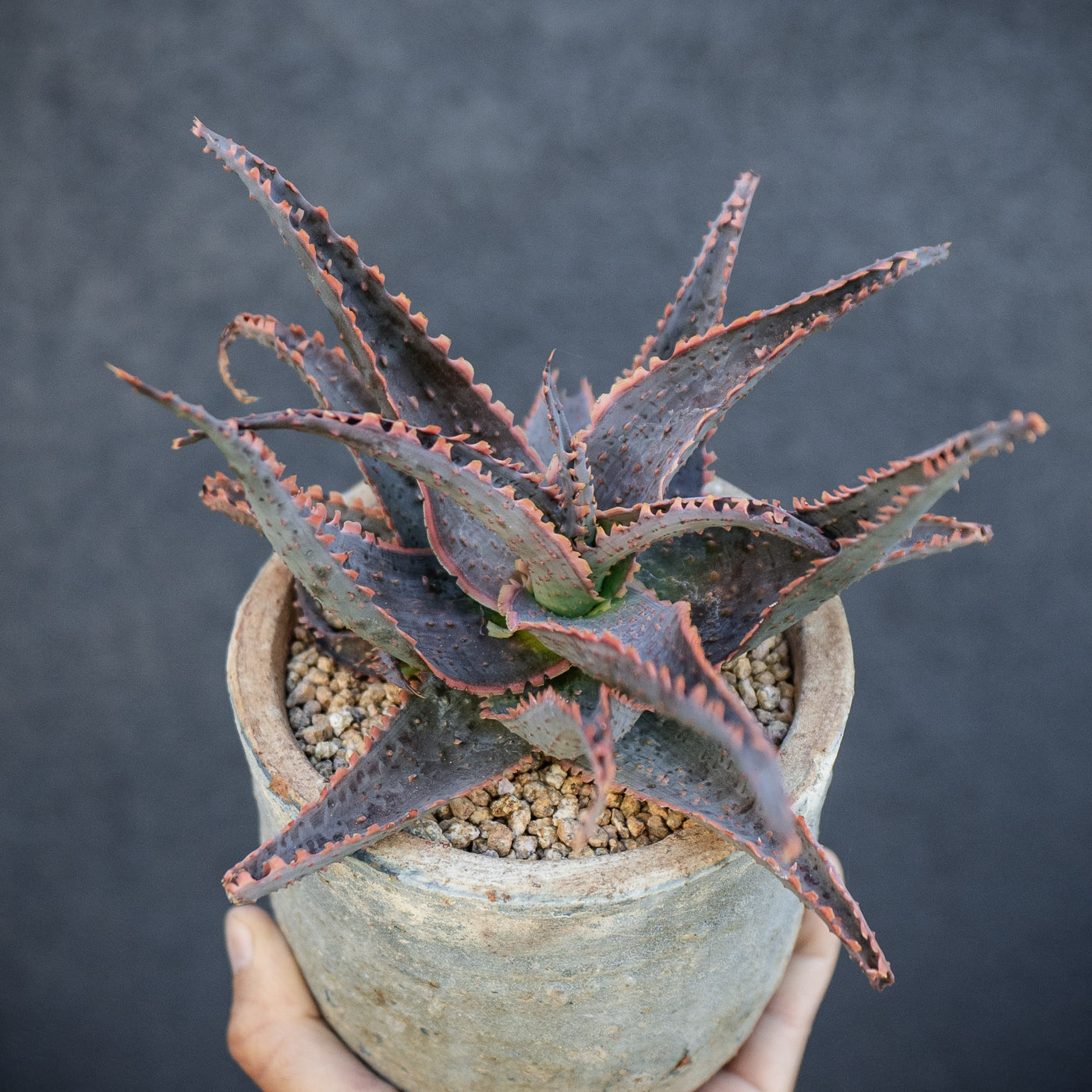
Aloe hybrid cv. Christmas Carol
Acquired5 months ago4/25/2026
Notes
Much like its ancestors from the Madagascar highlands, this hybrid is most active during the moderate temperatures of the shoulder seasons. It produces its most spectacular coloration—turning the leaf edges a glowing, festive red—when exposed to the cool nights and bright, sunny days of autumn and early winter. While it will continue to grow in the summer, it may lose some of its "glow" if the heat is excessive or if it is over-watered, reverting to a more standard green to protect its tissues.
In cultivation, "Christmas Carol" is a small, star-shaped rosette that rarely exceeds six inches in diameter, making it a perfect specimen for focused mineral-culture. It thrives in a lean, high-drainage substrate, specifically a mix of 80% pumice and 20% organic matter, which prevents the "soft" growth that can lead to rot in more peat-heavy soils. To maintain its namesake red trim and bumpy texture, it requires very bright light; in lower light conditions, the rosette will flatten and the red highlights will fade significantly. Watering should be deep but infrequent, allowing the pumice to dry out completely between sessions, and should be tapered off during the coldest part of the winter to respect its semi-dormant phase.
Origin
This plant is a highly stylized cultivar created through selective hybridization, famously attributed to the work of Kelly Griffin. Its genetic lineage traces back to species native to Madagascar, such as Aloe rauhii, which grows in the arid, sandy plateaus of the southwest. The "Christmas Carol" selection was specifically bred to emphasize intense color contrast, featuring deep green to blue-green leaves adorned with vibrant, raised red tubercles and bright crimson "teeth" along the leaf margins. These traits are derived from the evolutionary defenses of Malagasy Aloes, which use pigmented textures and waxes to deflect intense UV radiation in their native rocky habitats.
Note: Coordinates indicate a general region for educational purposes and are not exact locations. Please do not use them for collection or poaching.